Electrical engineers often compare RTV Silicone Coating and Insulator Washing when choosing the best long-term protection for high-voltage insulators. Outdoor electrical insulators are critical components of every power system. They operate in substations, transmission lines, power plants, railway traction substations, and industrial facilities. These environments expose them to harsh weather and pollution. Dust, cement particles, coal ash, salt deposits, moisture, and chemical fumes gradually accumulate on insulators. Bird contamination also affects insulation performance.If maintenance teams do not manage contamination properly, it can increase leakage current, create dry-band arcing, and eventually cause flashovers that interrupt power supply and damage valuable electrical equipment.
For decades, utilities have relied on insulator washing to remove contamination and restore surface cleanliness. While washing is an effective maintenance activity, many engineers question whether it is sufficient for long-term reliability, especially in heavily polluted environments. This has increased interest in RTV Silicone Coating, a technology that provides a hydrophobic protective layer capable of reducing the effects of contamination even after pollutants accumulate on the surface.
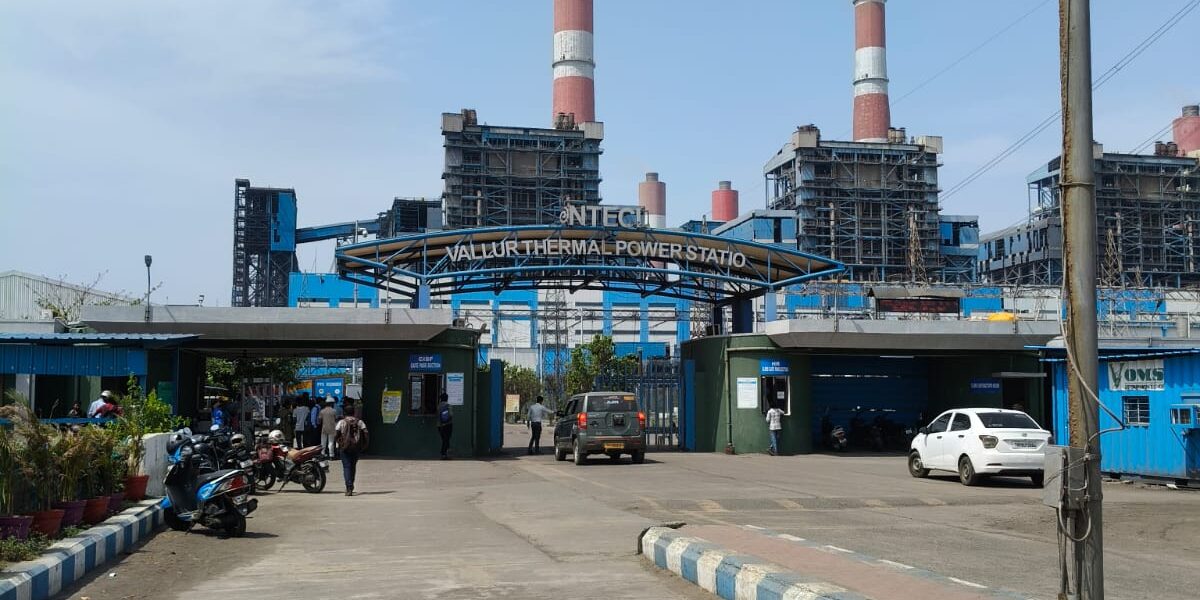
This article compares RTV Silicone Coating vs Insulator Washing from a technical and maintenance perspective. Rather than promoting one solution over the other, the goal is to help maintenance engineers, utilities, and industrial plants understand where each approach fits within an effective asset protection strategy. We will also share practical insights from an RTV Silicone Coating project completed by Agile Microsys Pvt. Ltd. at NTECL Vellur, where coating was applied to high-voltage insulators and bushings.
Why High Voltage Insulators Need Protection
Engineers design high-voltage insulators to electrically isolate energized conductors from grounded structures while safely supporting mechanical loads. Their performance depends not only on their design but also on the condition of their external surface. When contaminants build up on that surface, especially in combination with moisture from rain, fog, or humidity, they can create a conductive path that allows leakage current to flow.
Leakage current is often the first indication that an insulator is under stress. As the current increases, localized heating may occur, causing dry bands to form on the insulator surface. These dry bands can initiate arcing, and repeated arcing may eventually result in flashover. A flashover is a serious event because it can trip electrical equipment, interrupt power supply, increase maintenance costs, and reduce system reliability.
The level of contamination varies depending on the operating environment. Salt deposits affect coastal substations. Cement plants produce fine dust, steel plants release metallic contaminants, thermal power stations generate ash, and chemical industries emit corrosive airborne pollutants. Because each environment presents unique challenges, maintenance engineers must choose the most appropriate protection strategy instead of relying on a single maintenance method for every installation.
What is Insulator Washing?
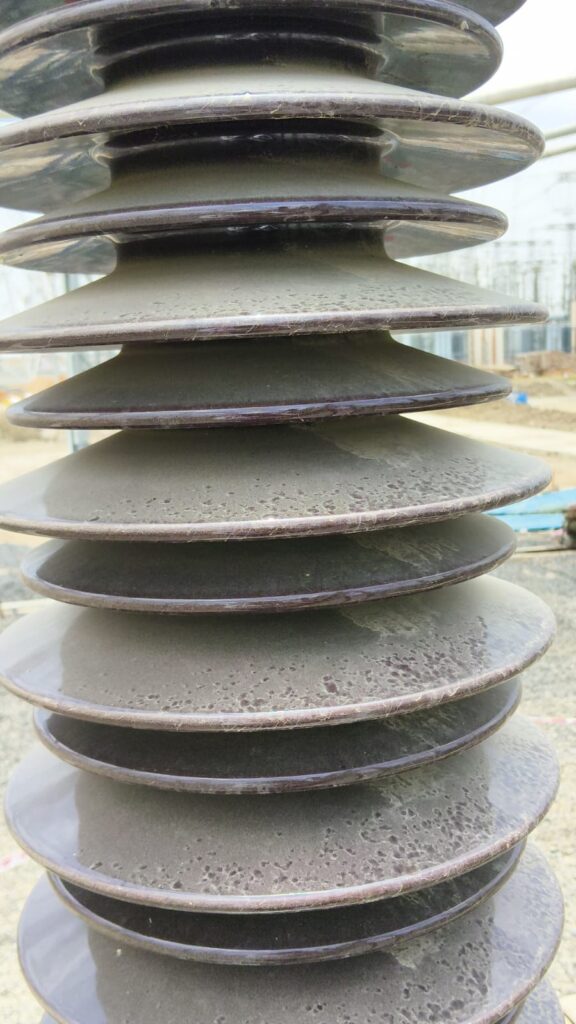
Maintenance teams use insulator washing to remove accumulated contamination from electrical insulators. Depending on system conditions and safety requirements, technicians perform washing manually during shutdowns or use specialized techniques for energized equipment.The objective is straightforward: eliminate conductive contaminants before they create leakage paths that could lead to electrical failures.
After washing, the insulator surface becomes cleaner and the process reduces the immediate risk of contamination-related flashovers. This is why many utilities include periodic washing as part of their preventive maintenance schedule. The effectiveness of washing depends on several factors, including the quality of the cleaning process, the type of contaminants present, weather conditions, and how quickly pollution begins to accumulate again after cleaning.
One of the main advantages of insulator washing is that it restores the existing surface without changing the equipment itself. It can be an appropriate solution where contamination levels are moderate and the interval between pollution events is relatively long. However, in highly polluted industrial areas, the benefits may be temporary because contaminants begin accumulating again almost immediately after maintenance teams complete the cleaning process.
Advantages of Insulator Washing
Insulator washing remains an important maintenance activity because it provides several practical benefits. It removes visible dirt and contamination, helps restore surface insulation performance, and can reduce the short-term risk of flashover. Many utilities already have established procedures and trained personnel for periodic washing, making it a familiar part of routine maintenance.
Another benefit is that washing does not require modifications to the existing insulator. Once the cleaning process is complete, the equipment can continue operating under normal conditions. In environments where contamination levels remain relatively low, periodic washing may be sufficient to maintain acceptable insulation performance.
Despite these advantages, maintenance teams should also consider how frequently washing must be repeated and whether it provides lasting protection under severe environmental conditions. These considerations become increasingly important when maintenance budgets, outage windows, and system reliability are closely monitored.
Limitations of Insulator Washing
Although insulator washing removes contamination at a specific point in time, it does not create a protective barrier that prevents new contaminants from settling on the surface. In industrial environments, fresh deposits of dust, salt, or chemical particles may begin accumulating within hours or days after cleaning.
As contamination returns, leakage current can gradually increase again, requiring another cleaning cycle. This repetitive maintenance approach may increase labor requirements, equipment downtime, and operational costs over the long term. In locations where access is difficult or outages are expensive, frequent washing can become a significant maintenance challenge.
For this reason, many utilities evaluate complementary technologies such as RTV Silicone Coating, which are designed not only to address existing contamination but also to improve the insulator’s ability to perform reliably as new contaminants accumulate.
What is RTV Silicone Coating?
Manufacturers develop RTV (Room Temperature Vulcanizing) Silicone Coating to protect outdoor high-voltage insulation from pollution, moisture, and environmental contaminants. Unlike ordinary paint, manufacturers formulate RTV coating specifically for electrical insulation applications.. Once applied and cured at room temperature, it forms a durable, weather-resistant, and hydrophobic layer that helps maintain insulation performance even when contaminants accumulate on the surface.
The key advantage of RTV Silicone Coating is that it does not simply cover the insulator—it changes how the surface interacts with water. Instead of allowing moisture to spread into a continuous conductive film, This coating causes water to form small droplets that roll off the surface. This significantly reduces the possibility of leakage current and minimizes the conditions that lead to dry-band arcing and flashover.
Utilities and industries use RTV Silicone Coating on porcelain, ceramic, and glass insulators, transformer bushings, current transformers (CTs), potential transformers (PTs), reactors, and other outdoor substation equipment. It is especially valuable in industries where airborne contaminants are unavoidable, such as cement plants, thermal power stations, steel plants, coastal substations, railway traction substations, and chemical processing facilities.
When applied following proper surface preparation and quality control procedures, RTV Silicone Coating can become an important part of a long-term asset reliability strategy by reducing maintenance frequency and improving equipment performance in polluted environments.
Learn more about our RTV Silicone Coating Services.
How Does RTV Silicone Coating Work?
The performance of RTV Silicone Coating is based on one of its most important properties—hydrophobicity. Hydrophobicity refers to the ability of a surface to repel water. On an untreated contaminated insulator, rain or condensation can spread across the surface, creating a continuous moisture film. If pollution is already present, this moisture film becomes electrically conductive, allowing leakage current to flow.
An RTV-coated insulator behaves differently. Water forms individual droplets rather than a continuous sheet, breaking the conductive path that leakage current requires. Even when pollution is present, the hydrophobic nature of the silicone coating helps maintain insulation performance under challenging weather conditions.
Another unique characteristic of quality RTV coatings is hydrophobicity transfer. Low molecular weight silicone components can migrate into the contamination layer, helping the deposited pollution become water-repellent over time. This feature distinguishes RTV Silicone Coating from conventional protective paints and is one of the reasons it is used in heavily polluted electrical environments.
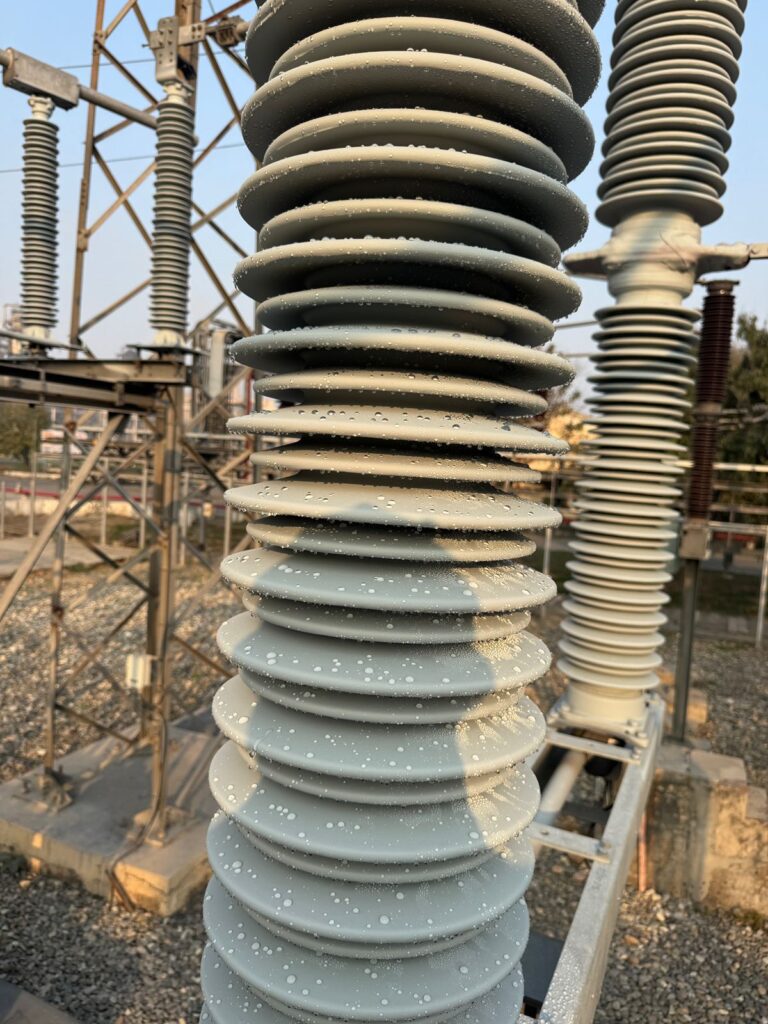
Although no maintenance solution completely eliminates the need for inspection, hydrophobicity allows coated insulators to maintain more stable electrical performance between maintenance intervals compared to untreated surfaces operating under similar environmental conditions.
RTV Silicone Coating vs Insulator Washing
Both RTV Silicone Coating and Insulator Washing play valuable roles in maintaining electrical insulation, but they solve different problems. Washing removes contamination that has already accumulated, while RTV coating helps the insulator continue performing effectively as contamination builds up again.
Instead of viewing them as competing technologies, many utilities use them as complementary maintenance strategies. The choice depends on pollution severity, maintenance resources, accessibility of equipment, outage schedules, and long-term reliability objectives.
| Feature | RTV Silicone Coating | Insulator Washing |
|---|---|---|
| Removes Existing Contamination | No (surface must be cleaned first) | Yes |
| Creates Hydrophobic Surface | Yes | No |
| Helps Reduce Leakage Current | Yes | Temporarily |
| Long-Term Protection | Yes | Limited |
| Requires Frequent Repetition | Lower frequency | Higher frequency |
| Suitable for Heavy Pollution | Yes | May require repeated cleaning |
| Supports Long-Term Reliability | Yes | Mainly short-term restoration |
For More Technical Information
For additional technical information on silicone coatings and outdoor insulation performance, you can visit the following resources.
Follow Us:
Linkedin:https://www.linkedin.com/company/agilemicrosys
YouTube:https://www.youtube.com/@AgileMicrosys
This comparison highlights that the two approaches address different aspects of maintenance. Washing restores cleanliness, while RTV coating helps preserve performance over a longer period after proper preparation and application.
Which Solution Offers Better Long-Term Protection?
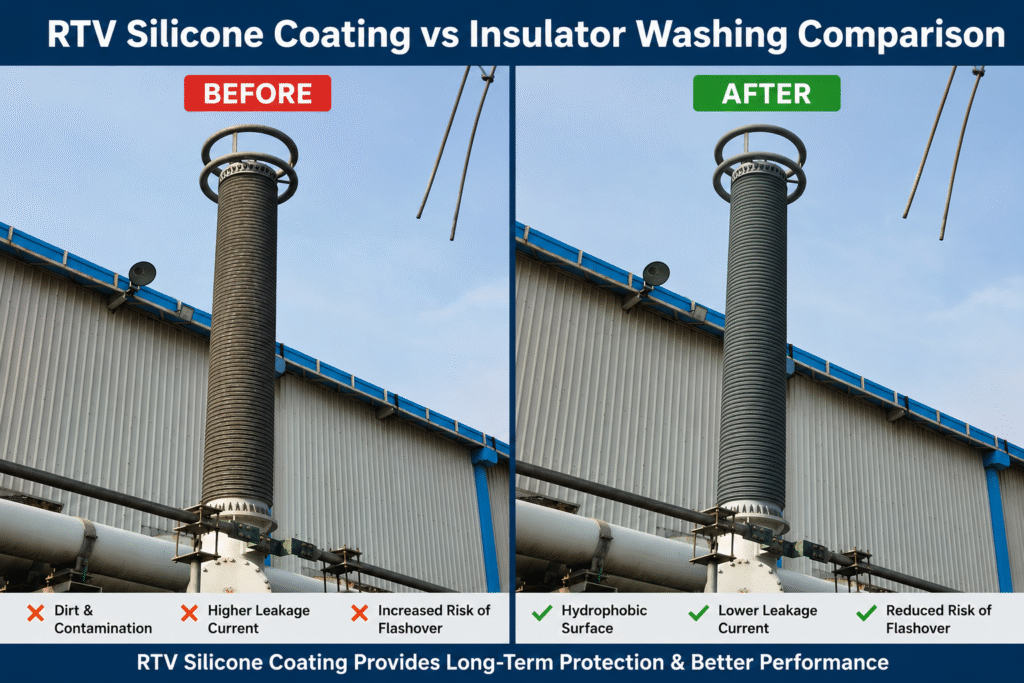
There is no universal answer because every electrical installation operates under different environmental conditions. However, when the objective is long-term protection in polluted environments, RTV Silicone Coating generally provides advantages beyond periodic washing alone.
In industrial areas where contamination quickly returns after cleaning, repeated washing can become time-consuming and expensive. Maintenance teams may need to schedule additional labor, equipment, and shutdowns to keep insulators clean. RTV Silicone Coating, by contrast, is designed to improve surface performance even as contamination accumulates, helping reduce the impact of pollution on insulation reliability.
This does not mean that insulator washing becomes unnecessary. Before applying RTV Silicone Coating, the surface must be properly cleaned and prepared. Periodic inspections also remain essential to verify the condition of coated equipment and identify any areas that may require maintenance.
A well-planned maintenance strategy often combines inspection, cleaning when necessary, and RTV Silicone Coating where environmental conditions justify additional long-term protection.
Real Project Example – NTECL Vellur
Theory is valuable, but practical field experience provides an additional perspective on how protective technologies are implemented.
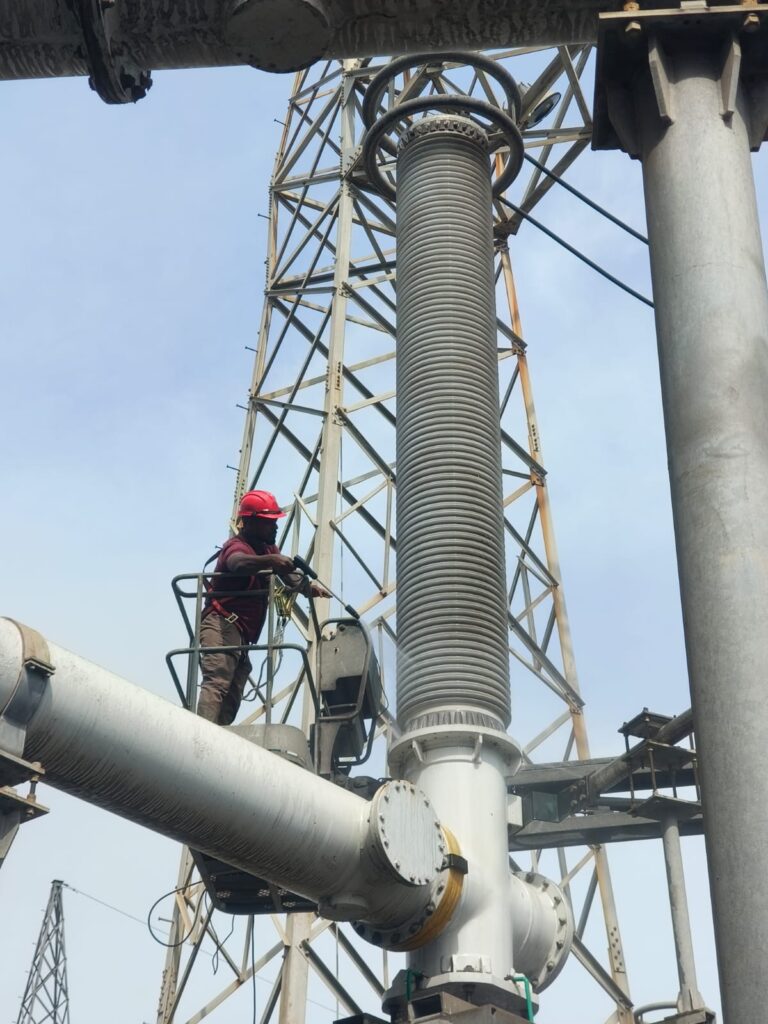
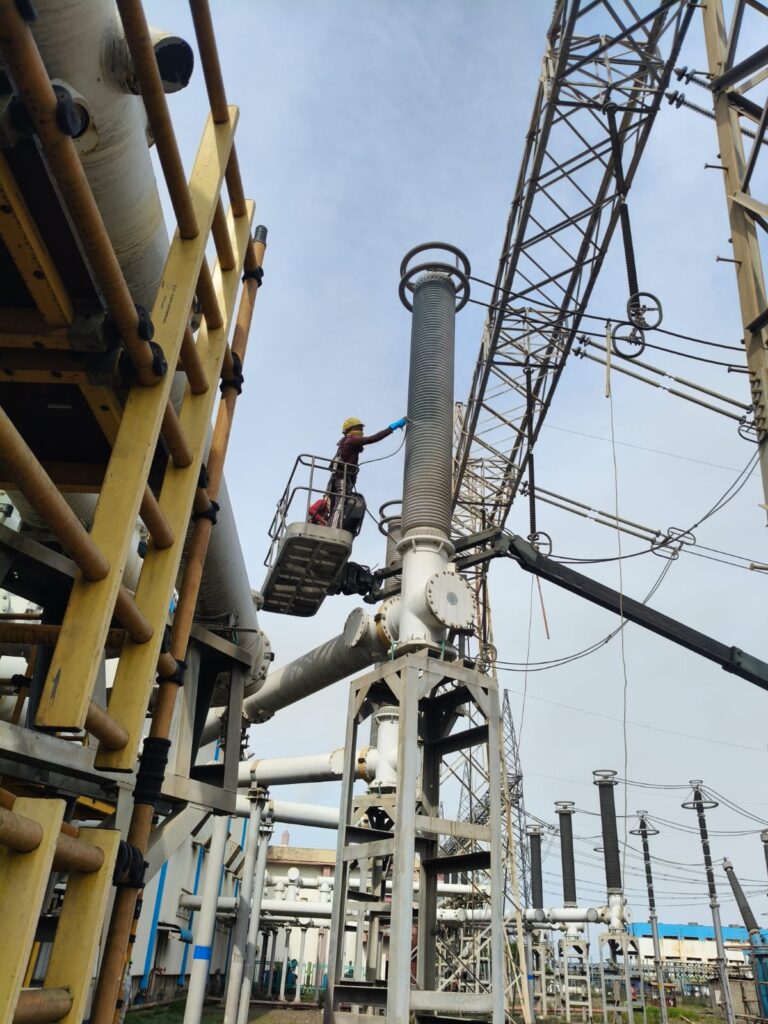
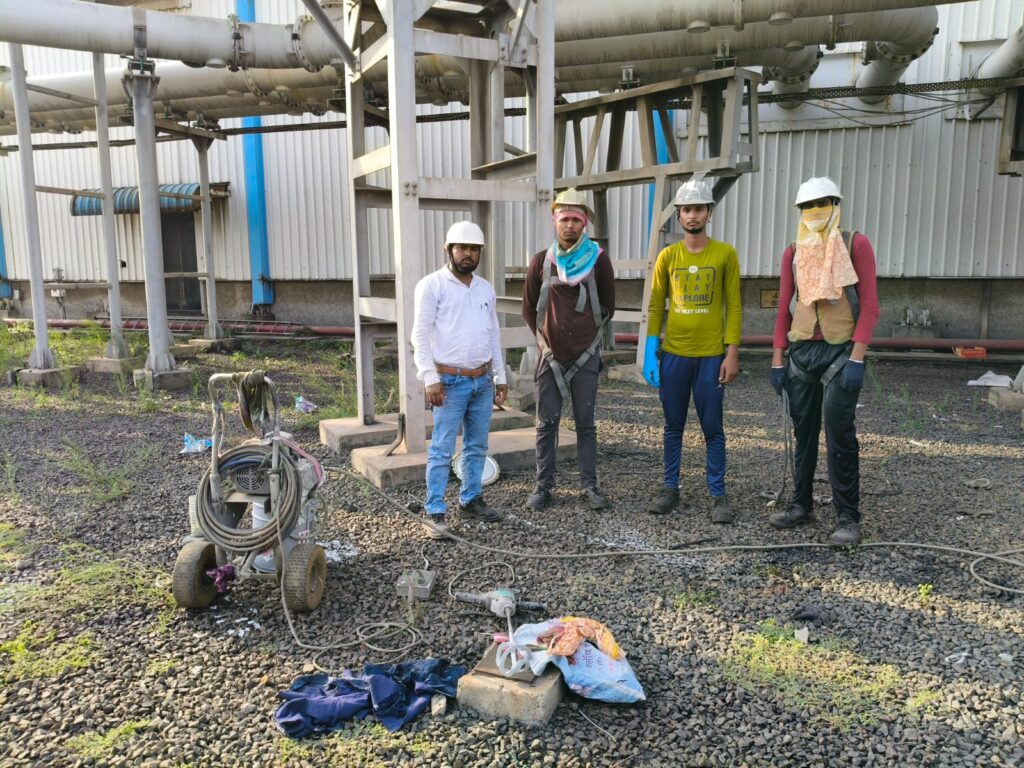
Agile Microsys Pvt. Ltd. successfully completed an RTV Silicone Coating project at NTECL Vellur, where Our engineers applied RTV Silicone Coating to high-voltage insulators and bushings.During the project focused on improving insulation reliability by applying a high-quality silicone coating after appropriate surface preparation and inspection.
The application process included careful cleaning of the equipment, preparation of the insulator surfaces, controlled coating application, and quality verification before project completion. Proper workmanship during every stage of the application is important because the long-term performance of RTV coating depends not only on the material itself but also on correct surface preparation and application practices.
The NTECL Vellur project demonstrates how industrial facilities can incorporate RTV Silicone Coating into their maintenance strategy to improve the protection of outdoor electrical insulation operating in demanding environmental conditions.
Why Choose Agile Microsys Pvt. Ltd.?
At Agile Microsys Pvt. Ltd., we provide advanced reliability solutions that help industries improve electrical safety, equipment reliability, and predictive maintenance.
Our expertise includes:
- RTV Silicone Coating for High Voltage Insulators
- Thermal Monitoring Systems
- Online Thermal Cameras
- SDT Ultrasound Inspection Solutions
- Condition Monitoring Services
- Predictive Maintenance Solutions
Every RTV Silicone Coating project is carried out with careful attention to surface preparation, application quality, and inspection practices, helping customers improve the long-term performance of their electrical assets.
Explore our Thermal Monitoring Solutions for predictive maintenance.
Which Solution Should You Choose?
Choosing the right solution depends on your operating environment. It also depends on your maintenance strategy and long-term reliability goals. If your electrical equipment operates in an area with low pollution and contamination builds up slowly, scheduled insulator washing may be sufficient to maintain performance. It removes dirt, dust, and other contaminants, restoring the insulator surface and reducing the immediate risk of leakage current.
However, many industries operate in much harsher conditions. Cement plants, steel plants, thermal power stations, coastal substations, mining operations, railway traction substations, and chemical facilities are continuously exposed to airborne pollutants that quickly settle on electrical equipment. In these environments, cleaned insulators can become contaminated again within a short period, making frequent washing both time-consuming and costly.
For such applications, RTV Silicone Coating offers a practical long-term solution. Once applied correctly on a clean surface, it provides a hydrophobic barrier that helps reduce leakage current and supports reliable insulation performance even as contamination accumulates. While regular inspections are still essential, RTV coating can reduce the need for repeated cleaning cycles and contribute to improved operational reliability.
Rather than treating RTV Silicone Coating and Insulator Washing as competing methods, many asset owners use them as complementary maintenance practices. Washing restores surface cleanliness before coating, and RTV coating helps maintain better electrical performance afterward. This combination supports a proactive maintenance strategy that focuses on reducing unexpected outages and extending the service life of high-voltage insulation.
If you have any questions about RTV Silicone Coating, Contact Us for expert guidance.
Conclusion
Maintaining reliable high-voltage insulation requires more than simply removing visible dirt. Pollution, moisture, and environmental contaminants continuously challenge the performance of outdoor electrical equipment, increasing the possibility of leakage current, dry-band arcing, and flashover.
Insulator Washing remains an important maintenance practice for removing contamination and restoring insulation performance. However, its benefits are generally temporary because new contaminants begin accumulating soon after cleaning. In heavily polluted environments, repeated washing may increase maintenance effort and operational costs.
RTV Silicone Coating provides an additional layer of long-term protection by creating a durable hydrophobic surface that helps reduce the impact of contamination on electrical performance. When combined with proper inspection, surface preparation, and quality application practices, it can become an effective part of a preventive maintenance strategy.
Agile Microsys successfully completed the RTV Silicone Coating project at NTECL Vellur. The project protected insulators and bushings. It also improved long-term reliability and electrical safety.
Whether you manage a power plant, railway traction substation, transmission network, or industrial facility, selecting the right maintenance approach should be based on environmental conditions, operational requirements, and long-term asset performance—not on short-term maintenance costs alone.
Download our Free RTV Silicone Coating Inspection Checklist
Planning an RTV Silicone Coating project or inspecting existing coated insulators?
Download our Free RTV Silicone Coating Inspection Checklist to help verify important inspection points before and after coating application.
Download the Free RTV Silicone Coating Inspection Checklist
Frequently Asked Questions (FAQs)
1. What is the main difference between RTV Silicone Coating and Insulator Washing?
Insulator washing removes existing contamination from the insulator surface, while RTV Silicone Coating creates a hydrophobic protective layer that helps maintain insulation performance even after new contamination accumulates.
2. Can RTV Silicone Coating replace Insulator Washing?
No. The insulator surface should be properly cleaned before applying RTV Silicone Coating. Washing and coating are complementary maintenance practices rather than direct replacements.
3. Why is hydrophobicity important?
Hydrophobicity causes water to form droplets instead of a continuous conductive film. This helps reduce leakage current and lowers the risk of pollution-related flashovers.
4. Where is RTV Silicone Coating commonly used?
RTV Silicone Coating is widely used on high-voltage insulators, transformer bushings, current transformers, potential transformers, reactors, switchyard equipment, and transmission line insulators.
5. Which industries benefit most from RTV Silicone Coating?
Industries operating in polluted environments, such as cement plants, steel plants, thermal power stations, railway substations, coastal utilities, and chemical industries, often benefit from RTV Silicone Coating.
6. Does RTV Silicone Coating eliminate maintenance?
No. Regular inspection and preventive maintenance remain essential for ensuring long-term equipment reliability.
7. How does RTV Silicone Coating improve electrical reliability?
By maintaining a hydrophobic surface, RTV Silicone Coating helps reduce leakage current, minimize dry-band arcing, and lower the likelihood of flashovers.
8. What should be checked before applying RTV Silicone Coating?
The insulator should be inspected, cleaned thoroughly, and verified to be dry and suitable for coating according to the manufacturer’s recommendations.
9. Can RTV Silicone Coating be applied to bushings?
Yes. this is commonly applied to transformer bushings and other outdoor insulation components where additional protection against pollution is required.
10. Why should industries consider RTV Silicone Coating?
Silicone Coating can support long-term insulation performance, reduce contamination-related risks, and contribute to improved asset reliability when applied correctly.