Introduction
RTV insulator coating provides a practical way to improve the protection of suitable high voltage insulators exposed to pollution, moisture, salt, and dust. By creating a hydrophobic surface, RTV coating helps reduce contamination-related leakage current and the risk of flashover. RTV silicone coating provides a hydrophobic protective surface that helps improve the pollution performance of high voltage insulators and reduce the risk of contamination-related flashover.
For utilities and industries operating in polluted, coastal, dusty, humid, or chemically aggressive environments, proper insulator protection can become an important part of preventive maintenance. Instead of depending only on repeated cleaning, facilities can consider a suitable RTV coating program based on the condition of the equipment and the surrounding environment.
Agile Microsys Pvt. Ltd. provides RTV silicone coating solutions for high voltage electrical equipment and has experience with insulators, current transformers, reactors, panels, and other electrical assets.
Why High Voltage Insulators Need Pollution Protection
Outdoor high voltage insulators are continuously exposed to the environment.
Dust can settle on the insulation surface. Industrial emissions may add conductive contaminants. In coastal locations, salt deposits can accumulate. During fog, dew, rain, or high humidity, these contaminants can become wet.
As a result, the insulation surface may develop conditions that encourage leakage current and surface discharge.
The problem can become more serious when contamination and moisture occur together.
Common environmental contaminants include:
- Industrial dust
- Cement dust
- Coal particles
- Salt deposits
- Chemical pollutants
- Soil and sand
- Moisture
- Fog and humidity
Therefore, facilities with heavily contaminated electrical insulation should evaluate their insulation maintenance strategy instead of relying on cleaning alone.
How Pollution Can Lead to Insulator Flashover
A clean insulator normally provides strong electrical insulation. However, contamination changes the surface condition.
When pollution deposits become wet, a conductive layer can develop across parts of the insulator surface. Leakage current may then increase.
Under suitable electrical and environmental conditions, localized dry areas can develop and surface discharge activity can occur. If the condition becomes severe, it can contribute to tracking, arcing, and eventually flashover.
The process follows a simple sequence:
Pollution → Moisture → Leakage Current → Dry Band Formation → Arcing → Flashover Risk
This is why pollution control and insulation protection are important in high voltage systems.
What Is RTV Silicone Coating?
RTV stands for Room Temperature Vulcanizing.
RTV silicone coating is a silicone-based protective coating applied to suitable electrical insulation surfaces. After application and curing, the coating provides a hydrophobic surface.
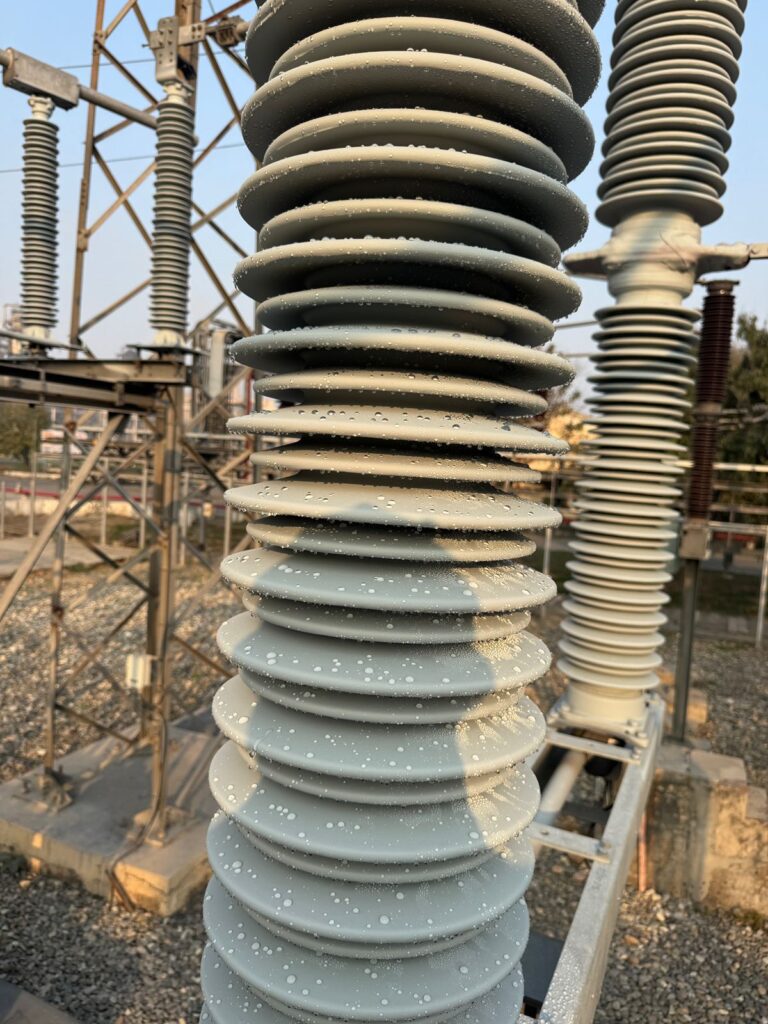
Hydrophobicity is important because water tends to form droplets rather than spreading into a continuous film across the surface.
This characteristic can help reduce the formation of continuous conductive moisture paths on contaminated insulation.
Research on RTV-coated insulators has also examined the relationship between hydrophobicity, pollution, humidity, leakage current, and flashover performance.
How RTV Coating Protects High Voltage Insulators
The main advantage of RTV silicone coating is the hydrophobic surface it creates.
Hydrophobic Insulator Surface
The coated surface resists wetting. Instead of allowing water to spread easily across the insulation, water tends to form droplets.
Consequently, the possibility of a continuous moisture film can be reduced.
Reduced Contamination-Related Risk
RTV coating does not mean that contamination can never occur. However, its hydrophobic characteristics can help improve the performance of insulation exposed to pollution and moisture.
Improved Flashover Protection
Pollution flashover is strongly influenced by contamination, humidity, surface condition, and electrical stress. RTV coatings have therefore been widely studied and used as an anti-pollution measure for outdoor insulation.
Support for Preventive Maintenance
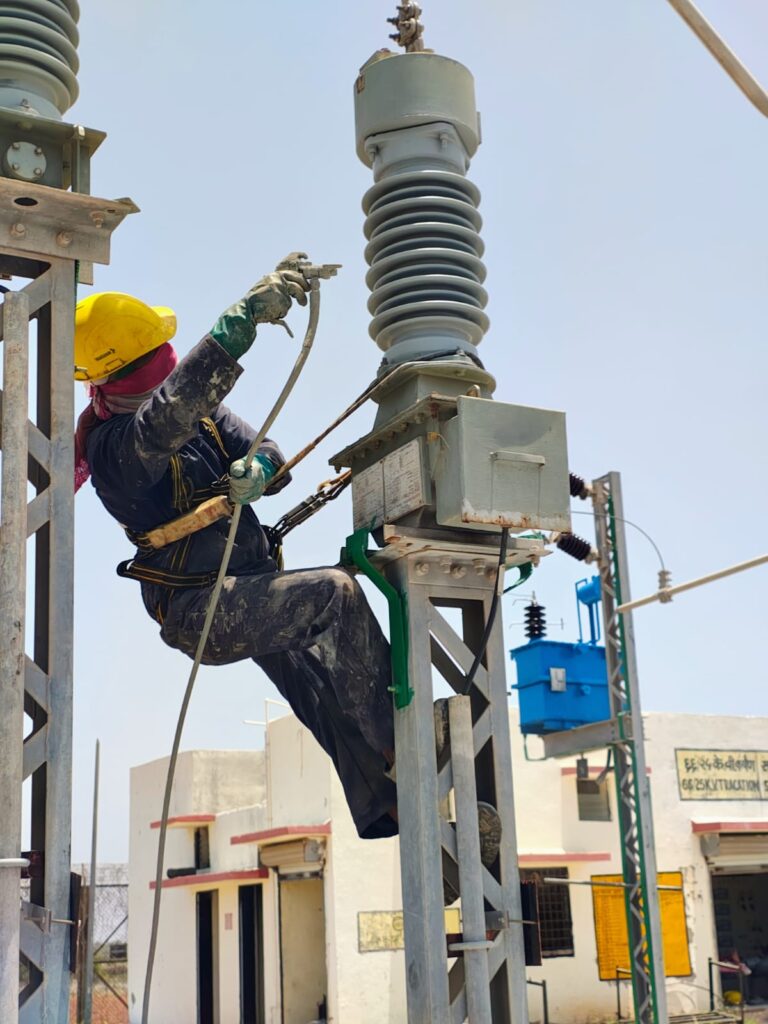
RTV coating can form part of a broader preventive maintenance strategy. Regular visual inspection and condition assessment remain important even after coating.
Key Benefits of RTV Silicone Coating for Insulators
A properly selected and applied RTV coating can provide several maintenance advantages.
1. Improved Hydrophobicity
The silicone surface provides water-repellent characteristics that can help reduce surface wetting.
2. Pollution Flashover Protection
The coating can improve the pollution performance of suitable high voltage insulation under contaminated and humid conditions.
3. Reduced Leakage Current Risk
By limiting continuous moisture-film formation, the coating can help reduce conditions that support surface leakage current.
4. Better Insulation Reliability
Protecting the insulation surface can support more consistent performance in challenging environments.
5. Reduced Dependence on Frequent Cleaning
RTV coating may reduce the need for frequent washing in some applications. However, the required maintenance schedule should always be determined from actual site conditions.
6. Long-Term Asset Protection
When properly selected, applied, inspected, and maintained, RTV coating can form part of a long-term insulation protection program.
RTV Coating vs Insulator Washing
Insulator washing is a common maintenance method for removing accumulated contamination.
However, washing primarily removes the contamination that is present at that particular time. New pollution can accumulate again.
RTV silicone coating works differently. Instead of simply removing contamination, it changes the surface characteristics of the insulation by providing a hydrophobic silicone layer.
Therefore, the two approaches should not always be viewed as direct replacements for one another.
A maintenance program may consider:
- Pollution severity
- Insulator condition
- Site environment
- Weather conditions
- Equipment criticality
- Existing maintenance practices
- Coating condition
For a detailed comparison, see our existing guide:
RTV Silicone Coating vs Insulator Washing: Which Solution Offers Better Long-Term Protection?
Where RTV Insulator Coating Can Be Used
RTV silicone coating can be considered for suitable high voltage insulation applications such as:
- Power substations
- Transmission systems
- Distribution systems
- Outdoor switchyards
- Current transformers
- Potential transformers
- Reactors
- Bushings
- Ceramic insulators
- Industrial electrical equipment
- Railway electrical infrastructure
- Power generation facilities
The suitability of coating depends on the insulation material, operating conditions, surface condition, environmental exposure, and application requirements.
RTV Coating Application Process for High Voltage Insulators
The quality of the final coating depends heavily on preparation and application.
A typical project can include the following stages.
1. Site Inspection
The equipment and insulation condition should be assessed before coating.
The inspection can identify:
- Existing contamination
- Surface damage
- Cracks or defects
- Existing coating condition
- Accessibility
- Environmental conditions
2. Cleaning and Surface Preparation
Surface preparation is one of the most important stages.
Dust, loose contamination, grease, moisture, and other unwanted materials should be removed according to the applicable coating procedure.
A clean surface helps the coating achieve proper adhesion.
3. RTV Silicone Coating Application
The coating is applied uniformly over the prepared insulation surface using the appropriate application method.
The objective is consistent coverage without untreated areas or unnecessary defects.
4. Coating Inspection
After application, the coated surface should be visually inspected.
The inspection should look for:
- Uniform coverage
- Missed areas
- Surface defects
- Runs or uneven application
- Contamination during curing
5. DFT or Thickness Verification
Where applicable, coating thickness can be checked according to the project specification and suitable measurement procedure.
6. Final Quality Inspection
The completed equipment should be reviewed before the work is handed over.
Proper documentation can include photographs, inspection records, coating details, and test results where applicable.
Why Surface Preparation Matters for RTV Coating
RTV silicone coating performance depends on more than the coating material itself.
Poor surface preparation can affect adhesion and the quality of the finished coating.
For this reason, professional application should include appropriate inspection and preparation before coating begins.
At Agile Microsys, our RTV project work includes stages such as inspection, cleaning, surface preparation, coating application, inspection, and DFT verification where applicable.
Our CT and reactor coating project page provides a practical example of this structured approach.
GE KPS-1 Khavda BPI Insulator Coating – Project Case Study
Project Overview
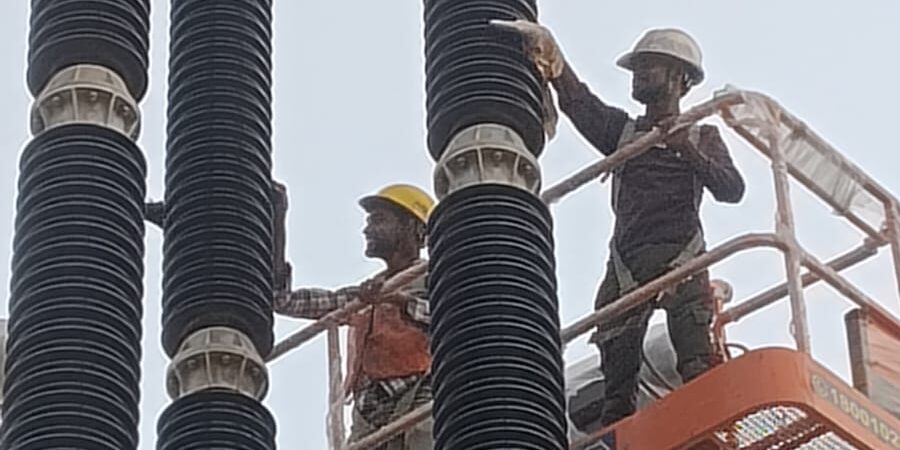
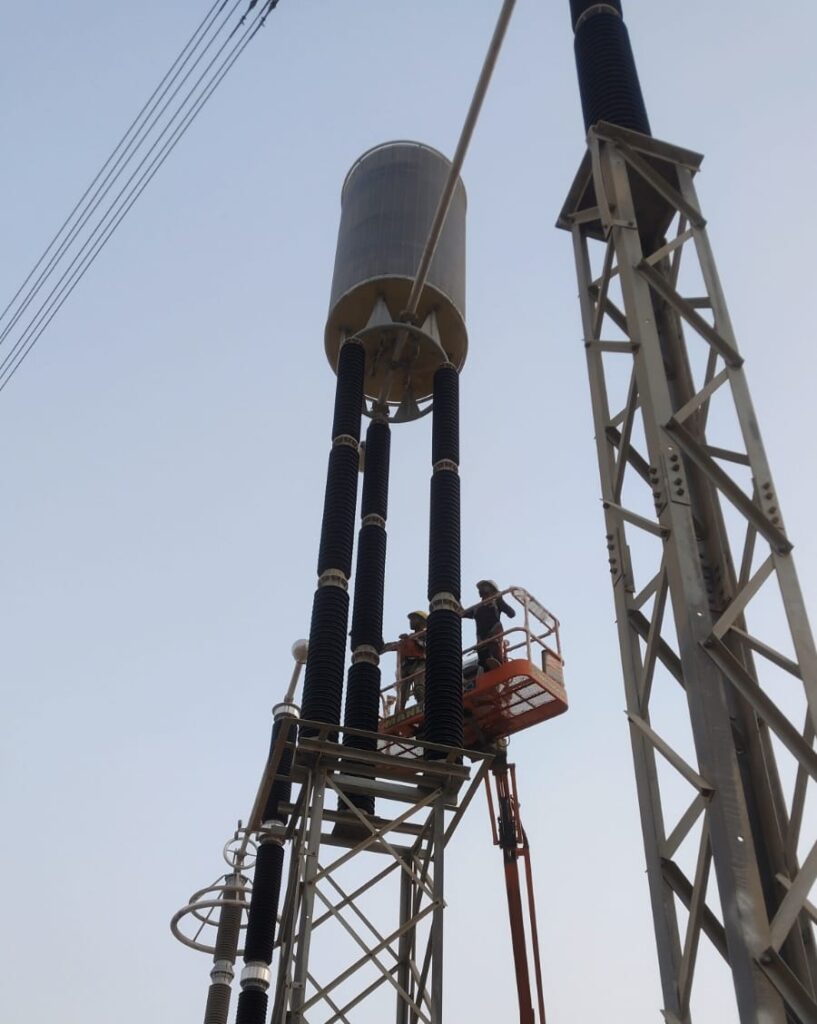
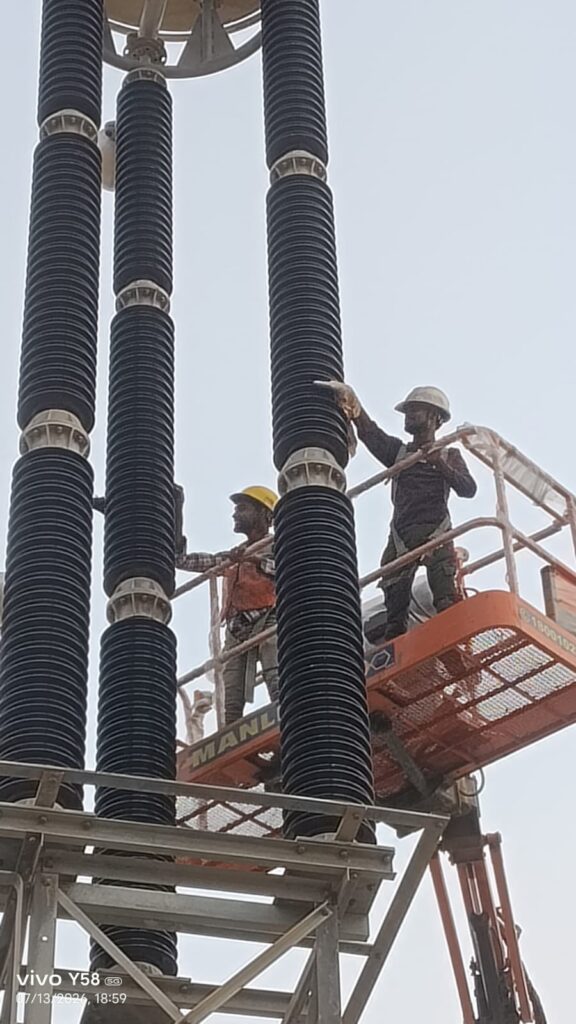
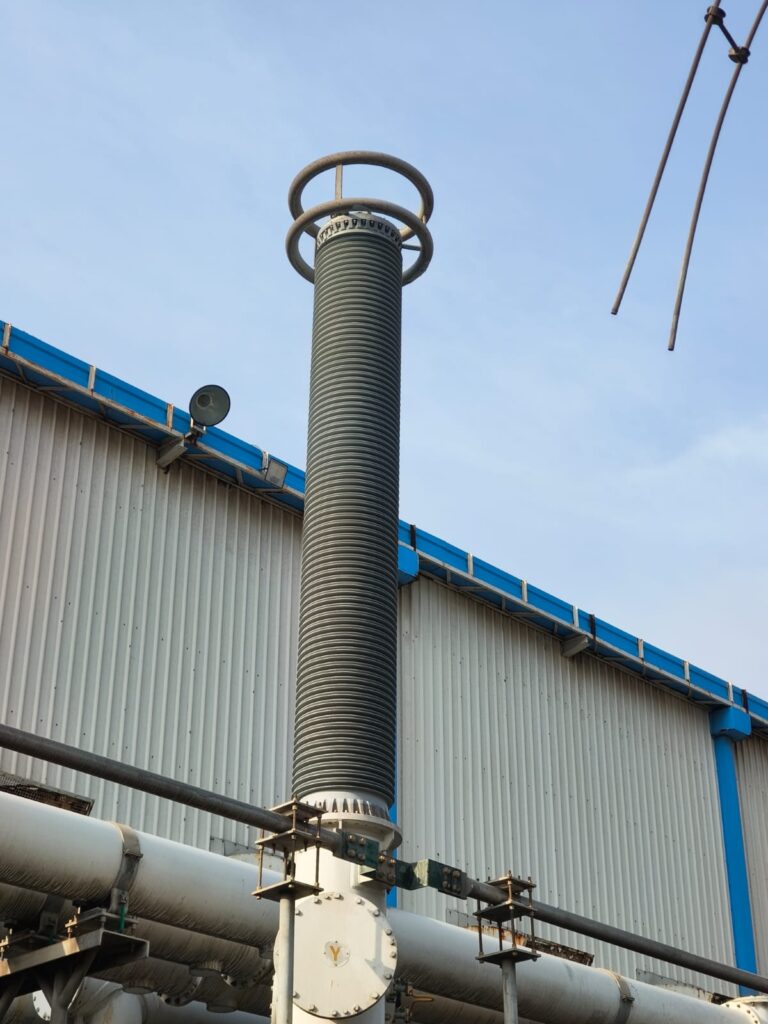
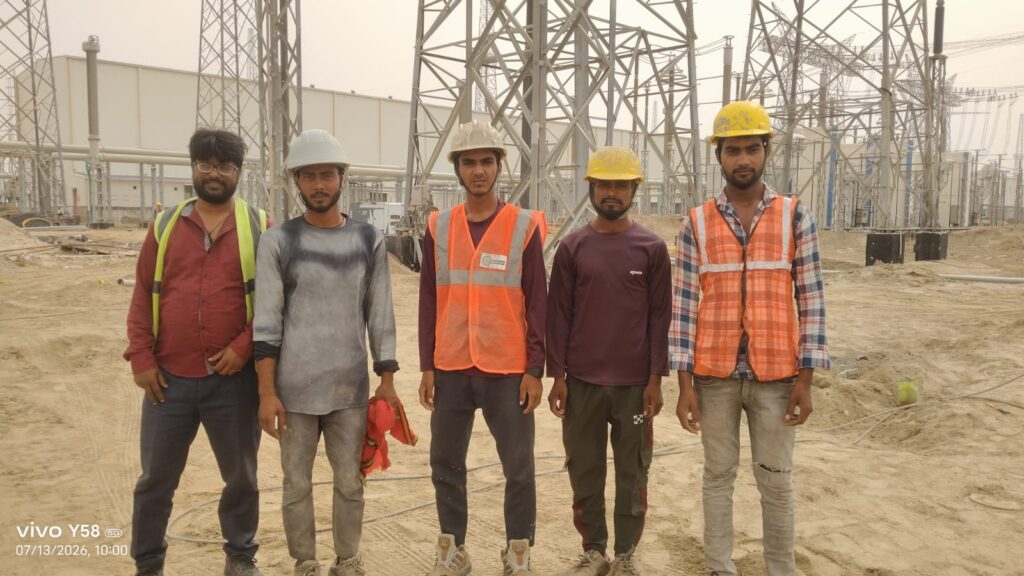
Agile Microsys Pvt. Ltd. recently completed an RTV silicone coating project on BPI insulators at GE KPS-1 Khavda.
This project provides a practical example of how RTV coating can be used as part of an electrical insulation protection program.
The Khavda project is particularly relevant because the region represents a demanding environment for outdoor electrical equipment, where environmental contamination and weather exposure need to be considered during asset maintenance.
Project Scope
The BPI insulator coating work involved the planned preparation and application of RTV silicone coating to the relevant insulation surfaces.
The project process included the key stages required for controlled coating application:
- Equipment and surface inspection
- Cleaning and surface preparation
- RTV silicone coating application
- Coating coverage inspection
- Final quality checks
What the GE KPS-1 Khavda Project Demonstrates
The GE KPS-1 Khavda project demonstrates an important principle of electrical asset protection: coating quality depends on preparation, application, inspection, and documentation—not simply on applying silicone to an insulator.
For every RTV project, the condition of the equipment should be understood first.
Then, the surface should be prepared correctly. After that, the coating should be applied consistently and inspected carefully.
This systematic approach helps create a more reliable and repeatable coating process.
RTV Coating for Polluted Industrial Environments
Polluted environments can create additional challenges for outdoor insulation.
Depending on the location, equipment may be exposed to:
- Industrial dust
- Salt contamination
- Cement particles
- Coal dust
- Chemical pollution
- Sand
- Moisture
- Fog
- Humidity
Silicone rubber’s hydrophobic behavior is one of the key reasons RTV coatings are used on conventional outdoor insulation to improve pollution performance.
However, coating should not be treated as a substitute for engineering assessment. Site conditions, insulation design, contamination severity, coating condition, and maintenance requirements all matter.
Why RTV Coating Inspection Should Continue After Application
Applying RTV coating is not the end of an insulation protection program.
The coating should continue to be visually inspected during routine maintenance.
Teams should look for:
- Mechanical damage
- Areas of coating loss
- Severe surface contamination
- Cracking or deterioration
- Unusual discharge activity
- Changes in insulation condition
Published research has shown that coating damage and humidity can influence pollution-flashover characteristics. Therefore, inspection of the coating condition remains important throughout the asset’s service life.
Choosing an RTV Silicone Coating Solution
Before selecting an RTV coating solution, maintenance teams should consider several factors.
Site Environment
Is the equipment exposed to industrial pollution, coastal salt, dust, humidity, fog, or chemicals?
Insulator Type
The insulation material, shape, surface condition, and application accessibility should be evaluated.
Equipment Criticality
Critical substations and electrical assets may require a more detailed protection and inspection strategy.
Application Quality
The contractor’s preparation, application, inspection, and documentation procedures are important.
Maintenance Strategy
Maintenance teams should integrate RTV coating into the site’s broader preventive and condition-based maintenance program.
Agile Microsys RTV Silicone Coating Solutions
Agile Microsys Pvt. Ltd. provides RTV silicone coating and industrial inspection solutions for electrical and power-system applications.
Our work includes protection of:
- High voltage insulators
- Current transformers
- Reactors
- Electrical panels
- Substation equipment
- Industrial electrical assets
Our approach focuses on proper preparation, controlled application, inspection, and project documentation.
Explore our RTV Silicone High Voltage Insulator Coating solution to learn more about the technology and applications.
Explore Related RTV Projects and Guides
For more practical information, explore these related Agile Microsys resources:
RTV Silicone High Voltage Insulator Coating – Learn about the coating technology and its applications.
Insulator Failure Prevention: Why Do Insulators Fail Even After Cleaning? – Understand why contamination can return and how insulation protection can support maintenance.
RTV Silicone Coating on Current Transformers and Reactors for Flashover Protection – See a practical CT and reactor coating project.
Conclusion: Protecting High Voltage Insulators with RTV Coating
Pollution, moisture, salt, dust, and changing environmental conditions can affect high voltage insulation.
When contamination becomes wet, surface leakage and discharge activity can become important maintenance concerns. RTV silicone coating provides a hydrophobic surface that can help improve the pollution performance of suitable high voltage insulation.
However, successful protection depends on the complete process.
Inspection → Cleaning → Surface Preparation → RTV Application → Quality Inspection → Ongoing Monitoring
The GE KPS-1 Khavda BPI Insulator Coating project demonstrates how a systematic coating process can support insulation protection in an industrial electrical environment.
If your substation, transmission system, power plant, railway installation, or industrial facility operates in a polluted or moisture-prone environment, a site assessment can help determine whether RTV silicone coating is appropriate for your insulation protection strategy.
Contact Agile Microsys Pvt. Ltd.
If you are looking for professional Partial Discharge Testing, Condition Monitoring, or Predictive Maintenance solutions, Agile Microsys Pvt. Ltd. is ready to support your maintenance goals.
Our services include:
- Partial Discharge Testing
- SDT Ultrasound Inspection
- Thermal Imaging
- Online Thermal Monitoring
- RTV Silicone Coating
- Electrical Asset Health Assessment
Contact our technical team today to schedule an inspection and improve the reliability of your electrical infrastructure.
Website: https://agilemicrosys.com
LinkedIn: https://www.linkedin.com/company/agilemicrosys
YouTube: https://www.youtube.com/@AgileMicrosys
Frequently Asked Questions About RTV Silicone Coating
What is RTV silicone coating?
RTV silicone coating is a room-temperature-vulcanizing silicone coating applied to suitable electrical insulation surfaces to provide a hydrophobic protective layer.
How does RTV coating help high voltage insulators?
RTV coating provides a hydrophobic surface that can reduce surface wetting and help improve the pollution performance of suitable high voltage insulation.
Can RTV coating prevent flashover?
RTV coating can help reduce the risk of contamination-related pollution flashover, but actual performance depends on the insulation system, contamination, humidity, electrical stress, coating condition, and other site factors.
Is RTV coating better than regular insulator cleaning?
Cleaning removes accumulated contamination, while RTV coating changes the surface characteristics of the insulation. Depending on the site, both cleaning and coating can form part of an appropriate maintenance strategy.
Where is RTV silicone coating used?
The coating is suitable for selected high voltage insulation systems used in substations, transmission networks, power plants, industrial facilities, railways, and similar electrical applications.
Why is surface preparation important before RTV coating?
Proper preparation helps remove unwanted contamination and supports good coating adhesion and uniform application.
What inspection is recommended after RTV coating application?
The inspection frequency should be based on the equipment, environment, coating condition, maintenance program, and site requirements. Routine visual inspection is important for identifying coating damage or deterioration.
Is RTV coating suitable for existing high voltage insulators?
Therefore, after assessing the insulation condition, technicians can apply RTV coating to suitable existing insulation following proper surface preparation. The specific application procedure should follow the coating manufacturer’s requirements and project specifications.