Introduction
Loose electrical connection detection is an important part of substation maintenance, especially when electrical equipment operates under high loads for long periods.
There may be no smoke.
No visible spark.
No unusual sound.
And sometimes, no obvious sign that anything is wrong.
Yet a single loose connection creates electrical resistance. As a result, the resistance produces heat. Over time, this heat can damage the connection and nearby equipment eventually contribute to an unexpected outage.
This is where thermal imaging for electrical inspections becomes extremely valuable.
Thermal inspection can be carried out from a safe distance without making physical contact with the electrical equipment. Instead, it detects infrared radiation and converts temperature differences into a thermal image. This allows maintenance teams to identify abnormal heating at electrical connections, busbars, cable terminations, switchgear and other critical components while equipment is operating.
For large industrial facilities, this capability can make a major difference.
A useful example is the Hindalco Hirakud industrial environment in Odisha, where electrical power infrastructure plays an important role in supporting large-scale aluminium operations. Hindalco’s official information states that the Hirakud facility includes a smelter and is powered by a 467.5 MW captive power plant.
But the bigger question is:
How can an electrical maintenance engineer identify a loose connection before it becomes a costly failure?
Let’s understand it step by step.
How Can a Poor Electrical Connection Lead to Major Equipment Damage?
Electrical connections are expected to provide a reliable path for current.
When a connection is properly tightened and the contact surfaces are in good condition, electrical resistance remains relatively low.
However, conditions can change over time.
A connection may become loose because of:
- Mechanical vibration
- Thermal expansion and contraction
- Improper tightening
- Ageing equipment
- Corrosion
- Oxidation
- Repeated heating and cooling
- Mechanical stress
- Environmental contamination
When contact quality deteriorates, resistance at the connection can increase.
That increased resistance can produce additional heat.
The relationship is commonly expressed through:
Heat generation = I²R
where:
- I = current flowing through the connection
- R = resistance at the connection
The important point is that the heating effect increases with the square of current.
Therefore, a connection that appears acceptable during a light-load condition can become significantly hotter when the electrical load increases.
This creates a dangerous cycle:
Loose connection → higher resistance → more heat → further degradation → even more heating
Eventually, the problem can progress toward insulation damage, equipment failure, arcing or an unplanned outage.
Eaton similarly identifies loose connections, overheated connections, insulation degradation and overloaded circuits among causes of electrical asset hotspots.
The Problem Is That You Cannot Always See the Fault
Traditional electrical maintenance inspections often involve visual inspection, tightening checks and electrical measurements.
These methods are important.
However, a visual inspection alone may not reveal a developing thermal problem.
A terminal can look clean.
A bolt can appear properly installed.
A cable connection may look completely normal.
But if abnormal resistance is developing at the contact point, the temperature can tell a different story.
This is where infrared inspection becomes a valuable tool for maintenance teams.
Instead of asking:
“Does this connection look normal?”
the maintenance engineer can ask:
“Is this connection operating at a normal temperature compared with similar connections?”
That is a much more powerful question.
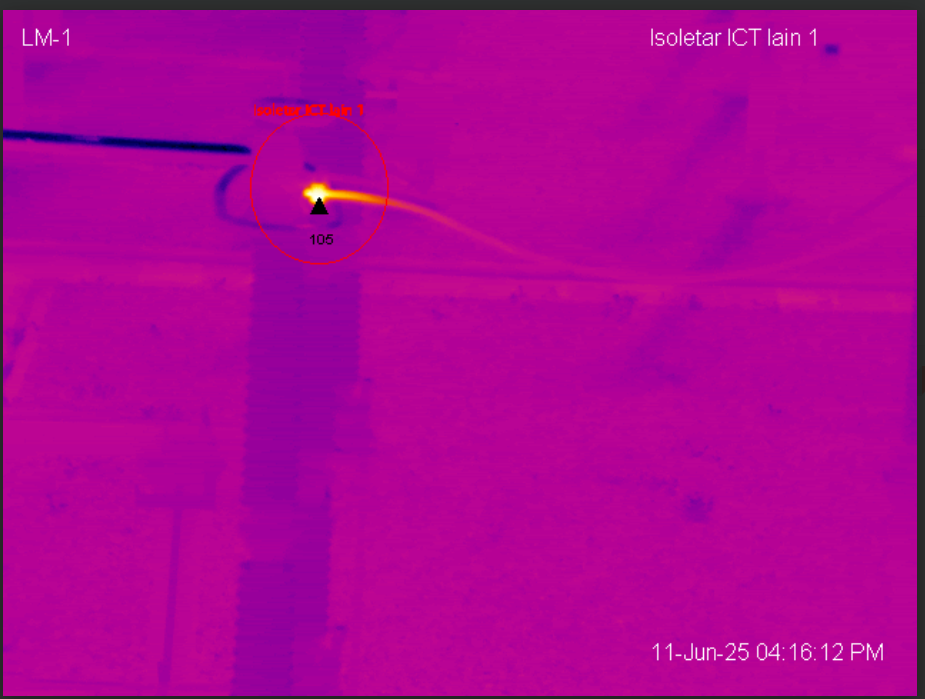
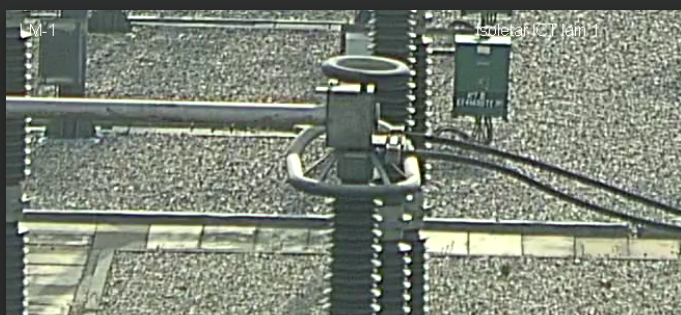
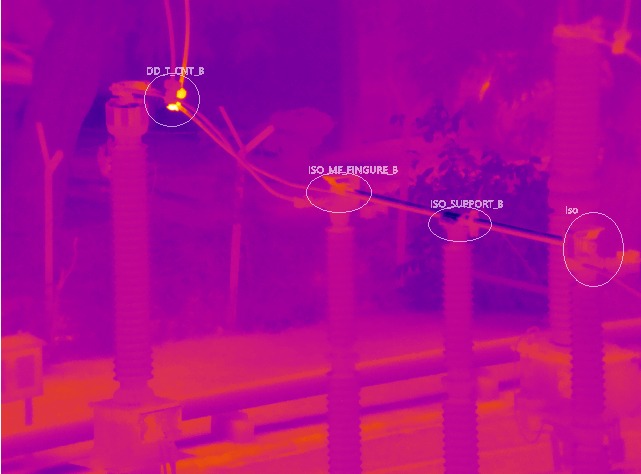
What Does a Loose Electrical Connection Look Like on a Thermal Camera?
Infrared cameras detect the heat emitted from surfaces and convert those temperature variations into a visual thermal map.
When a connection becomes hotter than surrounding components, it appears as a thermal anomaly.
For example, imagine three phases of a high-voltage electrical system.
Under similar operating conditions, their connection temperatures may be relatively close.
Now imagine that one phase has a deteriorating connection.
The thermal image could show:
| Phase | Thermal Condition |
|---|
| Phase A | Normal |
| Phase B | Normal |
| Phase C | Significantly Hotter |
That temperature difference becomes a warning sign.
The thermal camera does not automatically prove that the connection is loose.
Instead, it helps the maintenance team identify where abnormal heating exists so that the underlying cause can be investigated.
This distinction is important.
Thermal imaging is a powerful diagnostic tool, but thermal information should be interpreted together with load conditions, equipment design, environmental conditions and electrical measurements.
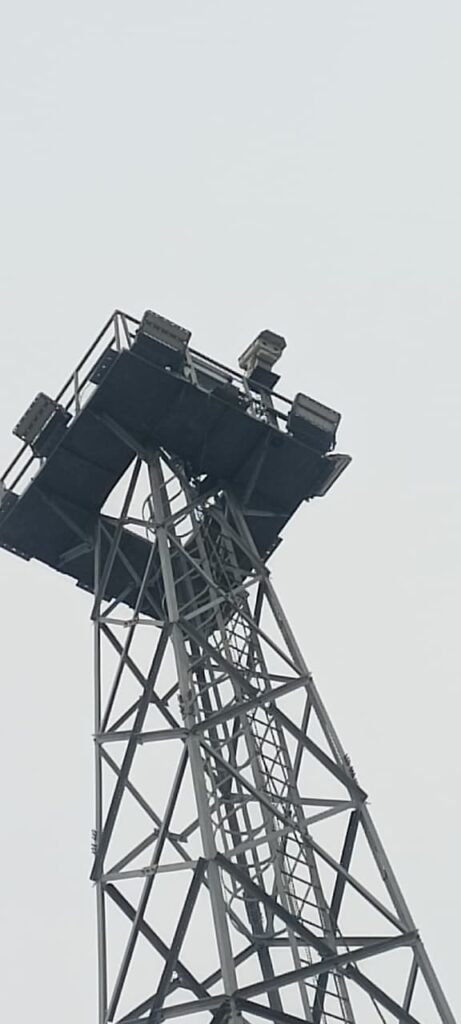
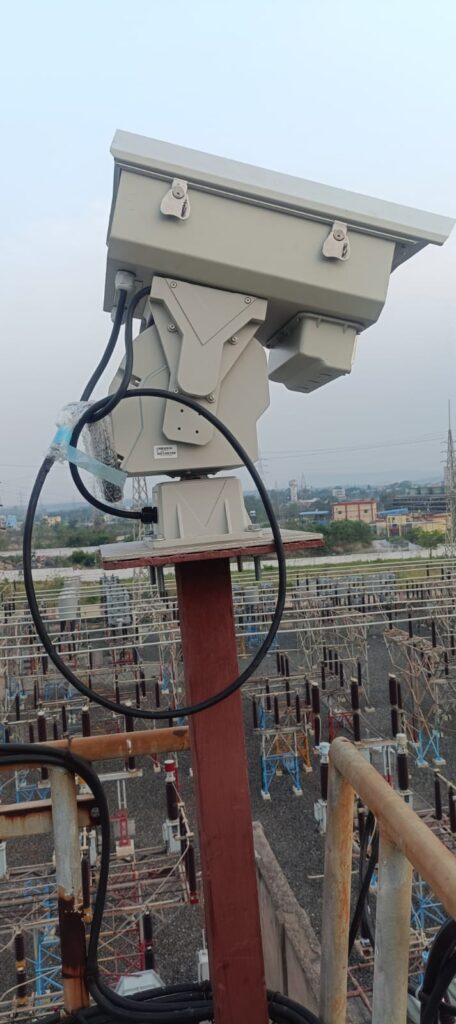
Loose Electrical Connection Detection Using Thermal Imaging
Effective loose electrical connection detection requires more than simply pointing a thermal camera at an electrical panel.
Step 1: Perform the Inspection While the Equipment Is Carrying an Appropriate Load
Thermal inspections are most useful when electrical equipment is carrying a meaningful load.
Why?
Because electrical heating is influenced by current.
A connection that is slightly resistive may not produce an obvious temperature rise when the load is very low.
Under higher operating load, the thermal difference may become much easier to identify.
Therefore, record the operating condition during the inspection.
Useful information can include:
- Equipment load
- Current
- Ambient temperature
- Inspection time
- Equipment identification
- Phase information
- Previous thermal readings
This information makes later comparison much more meaningful.
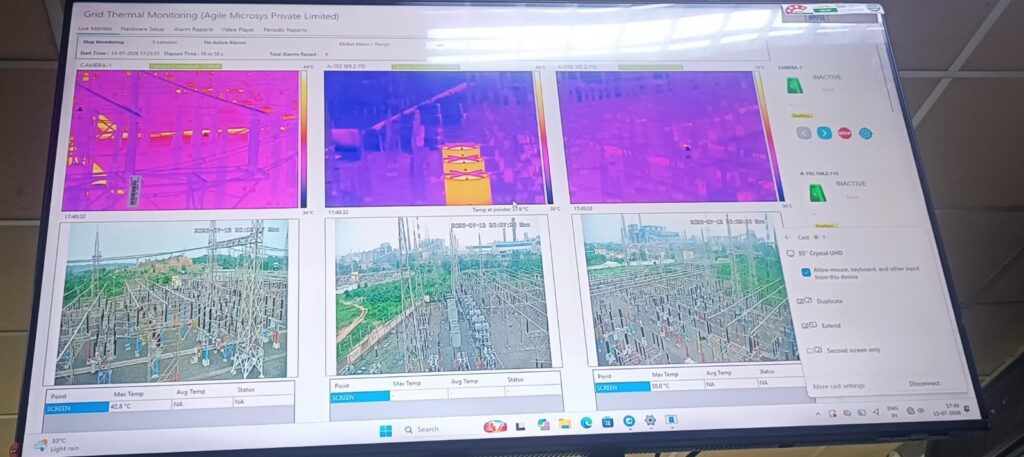
Step 2: Carry Out a Broad Thermal Scan of the Electrical Installation
Do not immediately focus on one connection.
First perform a broader scan.
Look at:
- Switchgear
- Busbars
- Cable terminations
- Circuit breakers
- Disconnectors
- Isolators
- Transformer connections
- CT and PT connections
- Lightning arrestor connections
- Panel connections
- Distribution equipment
A broad thermal scan can help identify unusual areas before detailed analysis begins.
Agile MicroSys describes thermal imaging as a way to monitor substation components including transformers, bushings, lightning arrestors, circuit breakers, mechanical disconnects, control cabinets and batteries.
Step 3: Evaluate Temperature Patterns Across Comparable Components
One of the most useful techniques in electrical thermography is comparison.
Suppose three similar cable terminations are operating under similar conditions.
Two show relatively similar thermal patterns.
One shows a concentrated hot area.
That difference deserves investigation.
The same principle can be applied to:
- Phase-to-phase comparisons
- Similar circuit breakers
- Parallel connections
- Similar busbar joints
- Multiple cable terminations
- Transformer connection points
The key question is not simply:
“Is this component hot?”
It is:
“Why is this component hotter than comparable components operating under similar conditions?”
Step 4: Identify Localized Areas of Excessive Heat
A loose connection often creates a localized thermal pattern.
Instead of the entire component being uniformly hot, the thermal image may show a concentrated hotspot around:
- A terminal
- A lug
- A connector
- A busbar joint
- A cable termination
- A breaker connection
- A contact point
This pattern can help direct the maintenance team toward the area requiring further investigation.
However, other faults can create similar heating.
For example:
- Overloading
- Phase imbalance
- Internal component problems
- Poor contact
- Corrosion
- Insulation problems
- High ambient temperature
Therefore, the thermal image should be treated as a diagnostic clue rather than an automatic fault diagnosis.
Step 5: Document the Temperature Variation Between Components
Temperature data makes the inspection much more useful.
Record:
- Maximum temperature
- Reference temperature
- Temperature difference
- Ambient temperature
- Load condition
- Equipment identification
The temperature difference between a suspect component and an appropriate reference is often more useful than looking at an isolated temperature number.
For example, saying:
“This connection is 72°C”
does not tell the complete story.
But saying:
“This connection is significantly hotter than comparable connections operating under similar load conditions”
provides much more useful maintenance information.
The actual acceptable temperature depends on the equipment, materials, manufacturer specifications, operating conditions and applicable standards.
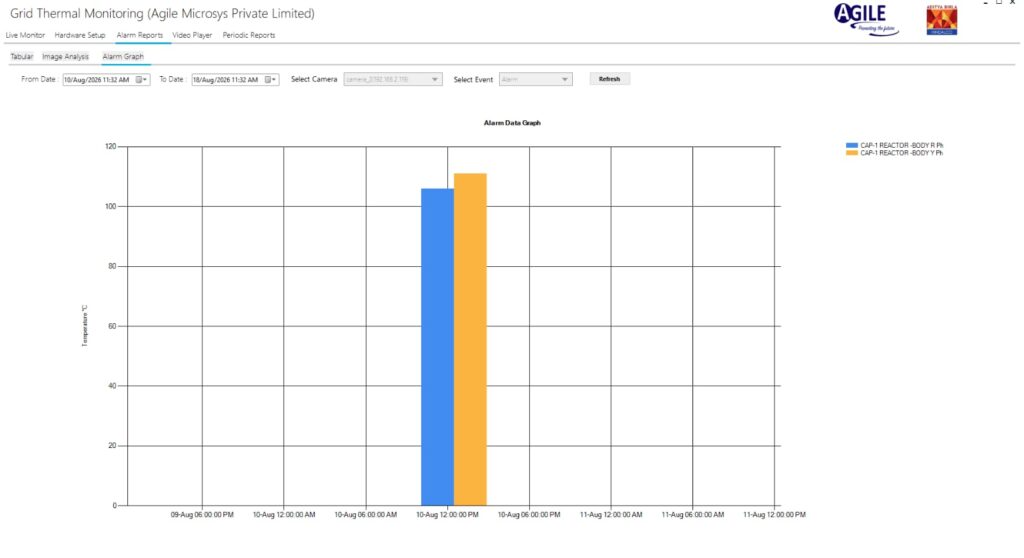
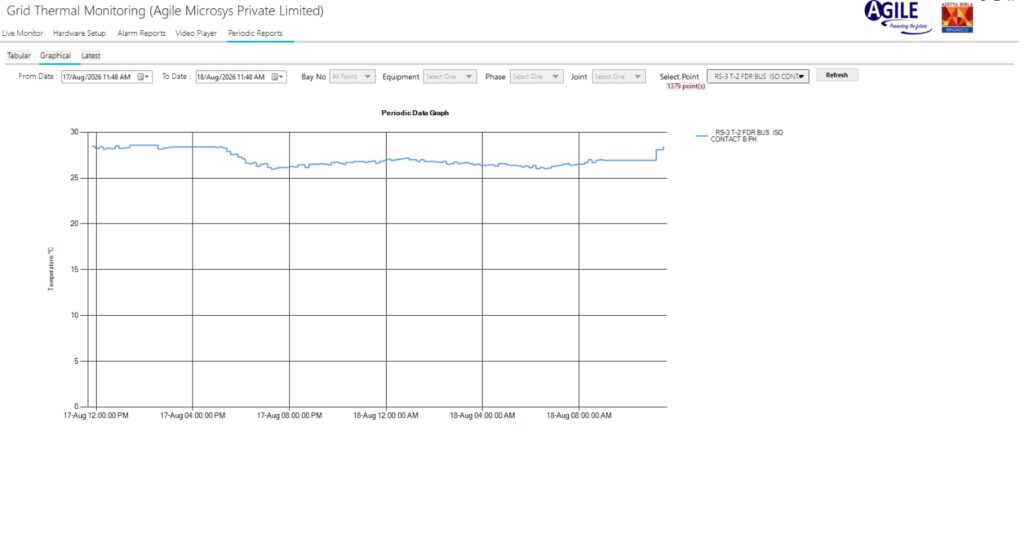
Step 6: Analyze the Thermal Image and Its Measurement Conditions
A good thermal inspection requires correct image interpretation.
The technician should consider:
Emissivity
Different materials emit infrared energy differently.
Highly reflective metal surfaces can make temperature measurement more difficult because reflected infrared radiation may influence the apparent temperature.
Distance
The camera should be positioned appropriately for the target and the camera’s measurement capability.
Focus
A poorly focused thermal image can reduce the quality of temperature analysis.
Field of View
Small electrical connections may require an appropriate lens or sufficient image resolution to distinguish the target clearly.
Reflections
Outdoor substations can contain reflective metallic surfaces, sunlight and surrounding environmental influences.
Wind
Wind can cool exposed electrical components and influence measured surface temperature.
Load
A thermal reading should always be considered in relation to the equipment’s operating load.
These factors matter because thermal imaging is not simply about finding the brightest spot on the screen.
It is about understanding why that temperature pattern exists.
Loose Electrical Connection Detection: Which Substation Components Should Be Checked?
A comprehensive thermal inspection can cover many critical electrical assets.
1. Busbar Connections
Busbar joints are critical points in substations.
A deteriorating connection can create localized heating.
Thermal scanning can help identify unusual temperature differences around joints and connection points.
2. Cable Terminations
Cable termination points are another important inspection area.
Loose or deteriorating connections can generate abnormal heating.
Thermal imaging allows the technician to compare similar terminations and identify unusual thermal patterns.
3. Circuit Breaker Connections
Circuit breakers contain important current-carrying connections.
Thermal inspection can help identify abnormal heating around connection points and terminals.
Agile MicroSys specifically identifies circuit breakers among substation components that can be monitored through thermal imaging.
4. Isolators and Disconnectors
Mechanical disconnects and isolators can develop contact-related problems.
Thermal imaging can help identify abnormal heating associated with poor connections or contact conditions.
5. Transformer Connections
Transformer terminals and associated connections should also be included in thermal inspections.
A thermal anomaly can provide an early indication that further investigation is required.
6. CT and PT Connections
Current transformers and potential transformers are important components in electrical protection and measurement systems.
Their external connection points can be included in thermal inspection routes.
7. Lightning Arrestors
Lightning arrestors can also be monitored for abnormal thermal behavior.
Thermal patterns should be compared with equipment condition, load and environmental conditions.
Thermal Imaging vs. Visual Inspection
Both methods have their place.
A visual inspection may identify:
- Physical damage
- Corrosion
- Loose hardware
- Discoloration
- Burning marks
- Cracks
- Contamination
Thermal imaging adds another layer.
It can identify temperature differences that may not yet be visible to the human eye.
This is why the two techniques work well together.
A good inspection program does not necessarily replace visual inspection with thermal imaging.
Instead, it combines them.
Visual inspection + electrical measurements + thermal imaging = better diagnostic visibility
Thermal Imaging for Loose Electrical Connection Detection
One of the major advantages of thermal imaging is that inspection can often be performed without physical contact with the electrical connection.
This is particularly valuable for electrical maintenance.
A thermal camera can capture the thermal condition from a suitable safe location without requiring the technician to touch the energized component.
However, thermal imaging does not eliminate electrical safety requirements.
Technicians must follow their site’s electrical safety procedures, safe approach distances, PPE requirements, permits and applicable standards.
The camera should be used as part of a properly controlled inspection process.
What Makes Thermal Imaging Better Than Waiting for Failure?
Consider two maintenance strategies.
Strategy A: Reactive Maintenance
The team waits until:
- Equipment trips
- A connection burns
- A breaker fails
- Production stops
- Smoke or burning smell appears
Then the fault is investigated.
The problem is obvious—but it is already expensive.
Strategy B: Condition-Based Maintenance
The team regularly monitors thermal patterns.
A connection begins showing an unusual temperature difference.
The problem is documented.
The connection is investigated.
Corrective maintenance is scheduled.
The equipment can potentially be repaired before the problem develops into a major failure.
This is the real value of thermal imaging.
It moves maintenance from:
“Something failed. Let’s repair it.”
toward:
“Something is changing. Let’s investigate it before it fails.”
Why Temperature Trends Are More Powerful Than One Thermal Image
One thermal image is useful.
A thermal history is even more useful.
Imagine a connection with these recorded temperatures:
January: Normal
March: Slight temperature increase
May: Noticeable temperature difference
July: Significant hotspot
That trend tells a story.
The equipment did not suddenly become defective.
The condition was developing.
Continuous monitoring and historical thermal data can help maintenance teams identify these changes earlier.
Eaton describes hotspot monitoring as a proactive approach based on monitoring temperature anomalies in electrical assets such as switchgear, transformers and circuit breakers.
Periodic Thermal Inspection vs. Continuous Thermal Monitoring
A handheld thermal camera is extremely useful for scheduled inspection rounds.
A technician can walk through a substation and inspect critical equipment.
However, what happens between inspections?
That is where continuous monitoring can provide another level of visibility.
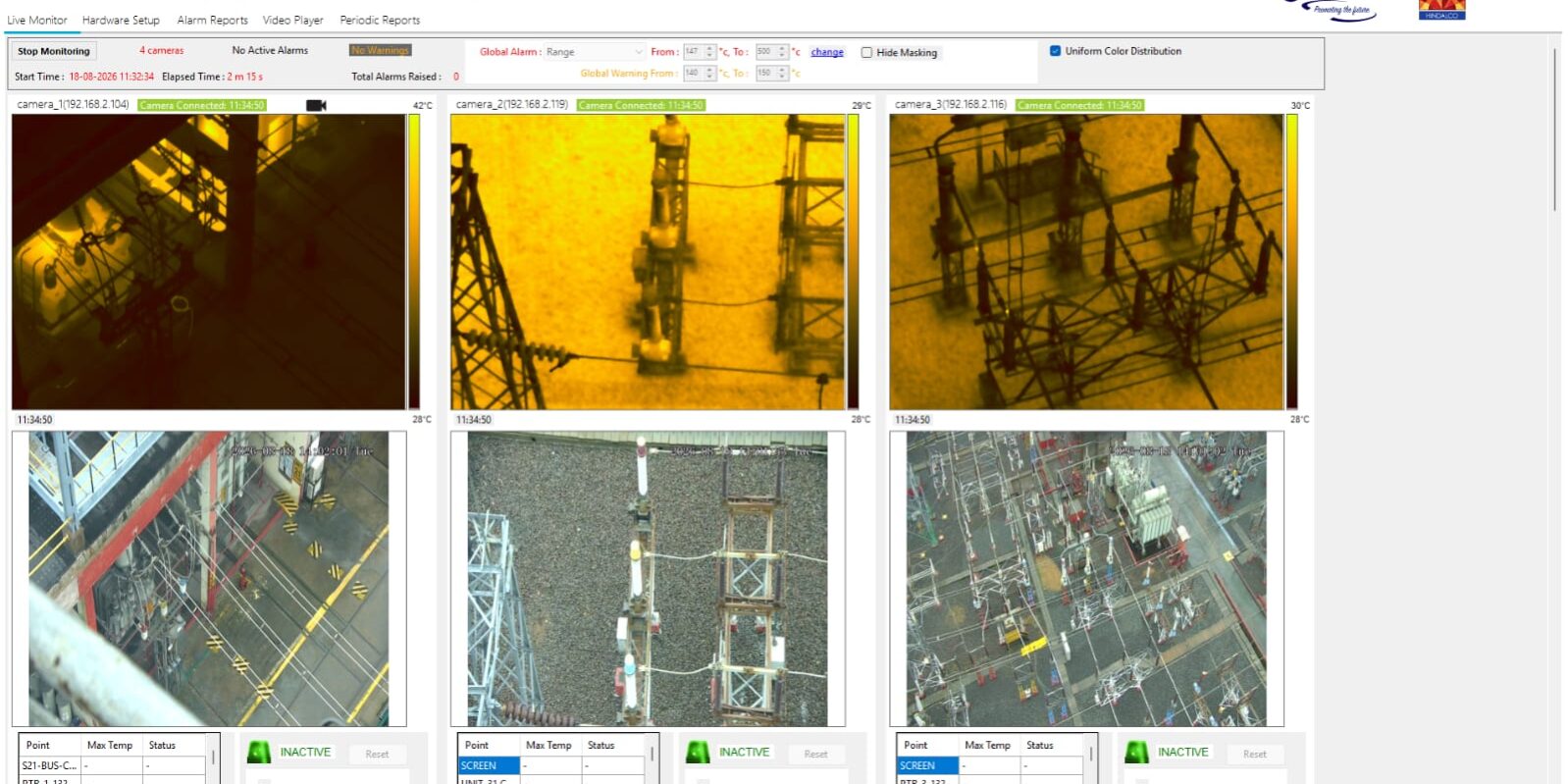
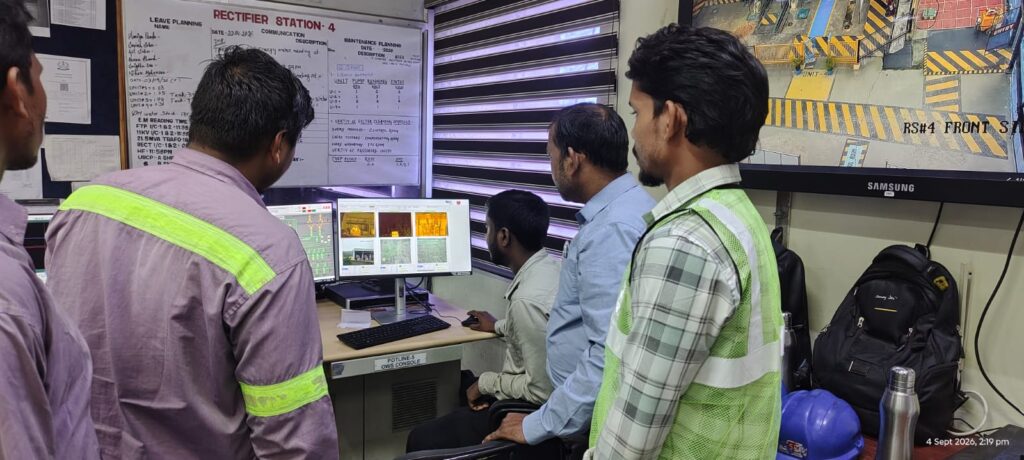
A fixed thermal monitoring system can continuously observe selected critical assets and identify abnormal temperature changes.
Agile MicroSys describes online substation monitoring systems using thermal imaging cameras and automation software to monitor equipment and provide early warning of abnormal conditions.
This can be particularly valuable where:
- Equipment is critical
- Failure consequences are high
- Access is difficult
- The process operates continuously
- Early warning is important
- Manual inspection alone is insufficient
Hindalco Hirakud: Why Thermal Monitoring Matters in Large Industrial Power Systems
Hindalco’s Hirakud facility is an important industrial operation in Odisha.
According to Hindalco’s official information, the Hirakud smelter has a production capacity of 216,000 tonnes per year and is powered by a 467.5 MW captive power plant.
Hindalco’s official plant-location information also lists the Hirakud Smelter & Power facility in the Sambalpur district of Odisha.
In an industrial environment where electrical power infrastructure is essential to operations, maintaining visibility into electrical equipment condition becomes increasingly important.
This is where the broader application of thermal imaging becomes relevant.
The purpose is not simply to take thermal photographs.
The objective is to identify abnormal heat patterns early enough for maintenance teams to investigate the underlying cause.
For a facility with critical electrical infrastructure, that visibility can support a more proactive approach to maintenance.
Important: this article does not claim specific thermal-camera installations, camera quantities, alarm settings or equipment monitored at the Hindalco Hirakud facility unless those details are confirmed through project documentation.
Instead, the Hirakud reference is used to illustrate the type of large industrial environment where electrical thermal inspection and condition monitoring can provide significant maintenance value.
What Should You Do After Finding a Hotspot?
Effective loose electrical connection detection helps maintenance teams investigate abnormal heating before it develops into a more serious electrical fault.
Finding the hotspot is only the first step.
The next step is diagnosis.
When an abnormal thermal pattern is identified, the maintenance team should consider:
1. Check the load
Was the equipment operating under unusually high load?
2. Compare similar phases
Is one phase significantly hotter than the others?
3. Check the connection
Once the equipment is made safe according to site procedures, inspect the connection mechanically and electrically.
4. Look for corrosion
Oxidation or contamination may contribute to increased contact resistance.
5. Check for physical damage
Look for signs of insulation deterioration, discoloration or heat damage.
6. Repeat the thermal inspection
After corrective work, another thermal inspection can confirm whether the abnormal temperature pattern has improved.
This creates a useful maintenance loop:
Detect → Investigate → Correct → Verify → Record
Common Mistakes in Loose Electrical Connection Detection
Thermal cameras are powerful, but poor inspection practices can produce misleading conclusions.
Mistake 1: Looking Only for the Hottest Object
The hottest object is not necessarily the faulty object.
It may simply be operating at a higher load.
Mistake 2: Ignoring Load Conditions
A temperature reading without load information can be difficult to interpret correctly.
Mistake 3: Inspecting Only Once
One inspection provides a snapshot.
Repeated inspections provide a trend.
Mistake 4: Ignoring Environmental Conditions
Sunlight, wind, rain and reflections can affect thermal measurements.
Mistake 5: Assuming Every Hotspot Is a Loose Connection
A hotspot can have several possible causes.
Always investigate before deciding on the corrective action.
Mistake 6: Taking the Image but Not Recording the Data
A thermal image becomes much more useful when it is linked to:
- Asset number
- Location
- Date
- Load
- Temperature
- Reference temperature
- Technician
- Corrective action
Good records transform thermal imaging from a simple inspection activity into a maintenance intelligence tool.
Thermal Camera Features for Loose Electrical Connection Detection
Not every thermal camera is suitable for every electrical inspection.
When selecting equipment, consider:
Thermal Resolution
Higher resolution can help distinguish smaller targets from greater distances.
Thermal Sensitivity
Good sensitivity helps identify relatively small temperature differences.
Temperature Measurement Capability
The measurement range should match the application.
Lens Options
Different lenses can help inspect both wide areas and smaller distant targets.
Image Quality
Clear thermal images make analysis easier.
Measurement Tools
Useful functions can include:
- Spot measurement
- Area measurement
- Line measurement
- Temperature difference
- Isotherms
Reporting
The ability to store and document thermal images helps create inspection records.
Connectivity
Depending on the workflow, connectivity can simplify data transfer and reporting.
For example, Agile MicroSys offers industrial thermal cameras for applications including electrical panels, switchgear, transformers and substations. Its AGILE AG600U is listed with a 640 × 512 infrared detector, multiple measurement tools and a temperature range of -20°C to +650°C.
For professional substation inspections, Agile also lists models for electrical and utility applications.
From Handheld Thermal Inspection to Online Monitoring
There is no single thermal monitoring strategy that fits every facility.
A handheld thermal camera can be ideal for:
- Routine inspection rounds
- Troubleshooting
- Preventive maintenance
- Electrical panel inspection
- Commissioning
- Follow-up inspections
Online thermal monitoring can be useful for:
- Critical substations
- High-value assets
- Remote equipment
- Continuous processes
- Areas where early warning is essential
The best approach may therefore combine both.
Handheld thermography provides flexibility.
Online thermal monitoring provides continuous visibility.
Together, they can create a stronger condition-monitoring program.
How Agile MicroSys Supports Electrical Thermal Inspection
Agile MicroSys provides thermal imaging and online thermal monitoring solutions for industrial applications.
Its substation monitoring solution uses thermal imaging and automation to monitor critical electrical equipment and identify abnormal temperature conditions.
Agile MicroSys also provides handheld thermal imaging cameras designed for electrical and industrial inspection applications.
The company’s published hot-spot detection work highlights applications such as identifying loose connections in switchgear and overheating electrical components.
For industries where electrical reliability matters, the goal is simple:
Find the abnormal condition before it becomes an unexpected failure.
The Real Value of Thermal Imaging Is Not the Picture
It is easy to think of thermography as simply taking a colourful picture.
But the real value is much greater.
A thermal image can become a maintenance decision.
For example:
Thermal anomaly detected
↓
Temperature compared with similar components
↓
Load and environmental conditions checked
↓
Electrical/mechanical inspection performed
↓
Root cause identified
↓
Corrective maintenance completed
↓
Thermal condition verified again
This process turns infrared data into actionable maintenance information.
That is why thermal imaging has become an important tool in predictive and condition-based maintenance.
Conclusion: Find the Heat Before It Finds You
For electrical maintenance teams, loose electrical connection detection can provide an important early warning when abnormal heating develops around critical connections.
A loose electrical connection rarely announces itself.
It may begin as a small increase in contact resistance.
Then the temperature rises.
The connection deteriorates further.
The hotspot becomes more severe.
Eventually, the problem may contribute to equipment damage, an electrical fault or an unexpected outage.
Thermal imaging gives maintenance teams a way to see this developing problem before it becomes obvious to the human eye.
For substations, thermal inspection can help identify abnormal heating at:
- Busbar connections
- Cable terminations
- Circuit breakers
- Isolators
- Transformer connections
- Switchgear
- CT/PT connections
- Other critical electrical assets
And the most important lesson is this:
Do not wait for an electrical connection to fail before investigating its condition.
Monitor temperature.
Compare similar components.
Track changes over time.
Investigate abnormal hotspots.
And use thermal information to make better maintenance decisions.
For large industrial environments such as the Hindalco Hirakud facility, where reliable electrical infrastructure supports major industrial operations, this proactive approach can be especially valuable. Hindalco confirms the scale of the Hirakud operation and its captive power infrastructure.
A small thermal anomaly today could be the warning that prevents a much bigger electrical problem tomorrow.
Frequently Asked Questions
1. Can thermal imaging detect loose electrical connections?
Yes. Loose or deteriorating electrical connections can create increased resistance and abnormal heating. Thermal imaging can identify these temperature anomalies so that maintenance teams can investigate the underlying cause.
However, a thermal hotspot does not automatically prove that a connection is loose. Other causes such as overload, corrosion, phase imbalance or component problems should also be considered.
2. Why do loose electrical connections become hot?
A poor electrical connection can have higher resistance. When current flows through that resistance, heat is generated. Because heating is related to I²R, higher current can significantly increase the amount of heat produced.
3. Can thermal imaging inspect energized electrical equipment?
Thermal cameras can be used to inspect electrical equipment from a suitable safe distance without physically touching the energized component. However, thermal imaging does not replace electrical safety procedures. Technicians must follow applicable site safety rules, PPE requirements and safe working practices.
4. What electrical equipment should be checked with a thermal camera?
Depending on the substation and inspection objective, equipment can include busbars, cable terminations, circuit breakers, isolators, disconnectors, transformer connections, bushings, CT/PT connections, lightning arrestors and switchgear.
5. Is a handheld thermal camera enough for substation inspection?
A handheld thermal camera can be highly effective for routine inspection rounds and troubleshooting. However, critical assets may benefit from online thermal monitoring when continuous temperature visibility and early warning are required.
6. What is the difference between thermal imaging and thermal monitoring?
Thermal imaging generally involves capturing and analyzing thermal images, often during scheduled inspections.
Thermal monitoring can involve continuously measuring or observing temperature conditions and generating alerts when abnormal conditions occur.
Both approaches can complement each other.
7. Can thermal imaging prevent electrical failures?
Thermal imaging cannot guarantee that a failure will never occur. However, it can help identify abnormal thermal conditions early, allowing maintenance teams to investigate and correct developing problems before they potentially become more serious.
Need a thermal imaging or online thermal monitoring solution ? Contact Agile Microsys Pvt. Ltd. to discuss your inspection requirement.
Contact our technical team today to schedule an inspection and improve the reliability of your electrical infrastructure.
Website: https://agilemicrosys.com
LinkedIn: https://www.linkedin.com/company/agilemicrosys
YouTube: https://www.youtube.com/@AgileMicrosys