Railway Thermal Monitoring plays an important role in observing the condition of critical electrical equipment in railway traction substations. These substations supply electrical power to railway systems, making it essential to monitor temperature variations in electrical connections and other critical components. Thermal imaging technology helps maintenance teams identify unusual temperature patterns without direct physical contact with the monitored equipment.
Traditional inspection methods are essential for electrical maintenance. However, thermal imaging technology adds another level of visibility by allowing maintenance teams to observe temperature variations without direct physical contact with the monitored equipment.
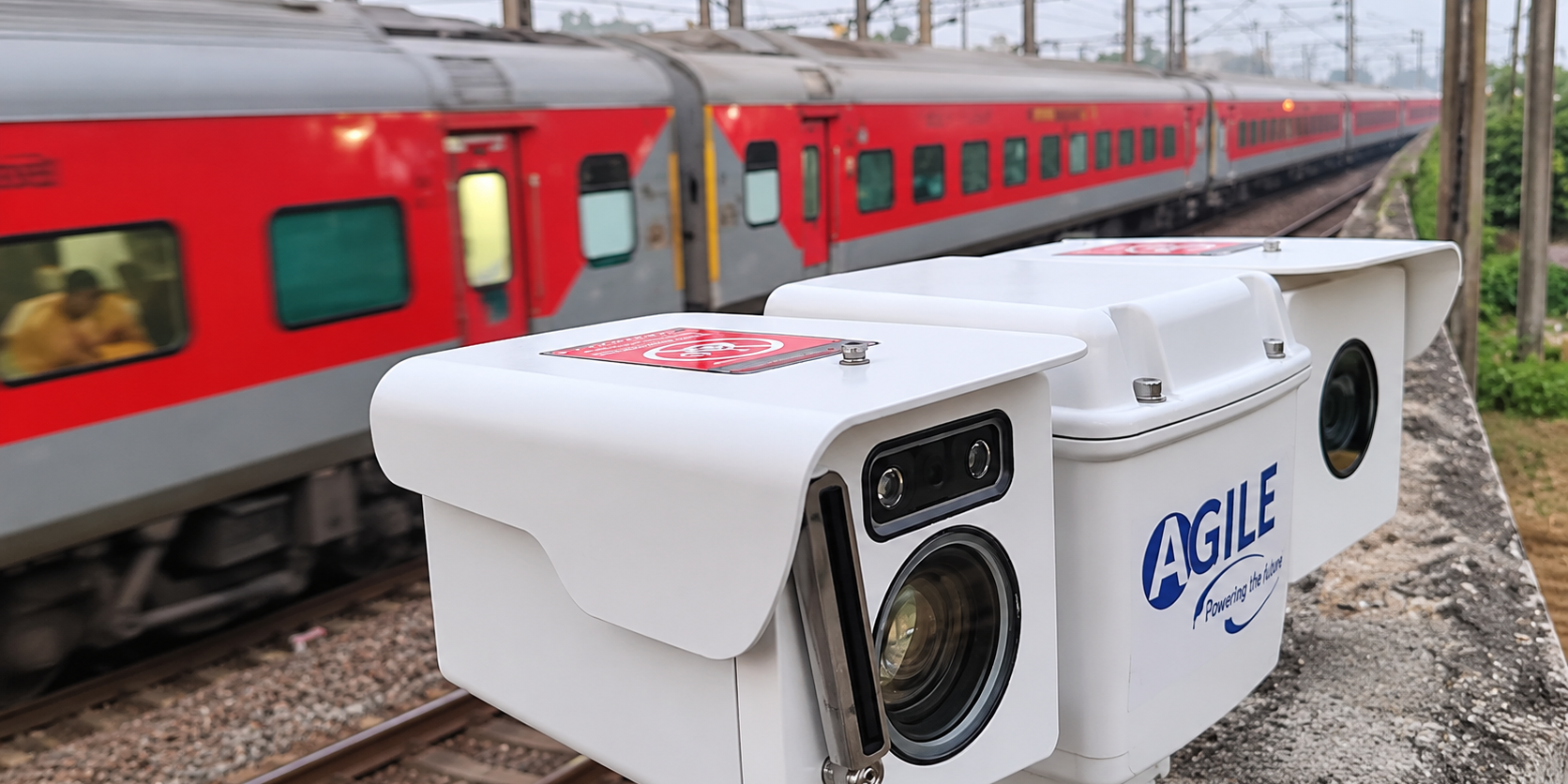
GTRM PRO 2.0 – Grid Thermal Remote Monitoring System by Agile MicroSys Pvt. Ltd. brings thermal imaging cameras and intelligent monitoring software together to support railway traction substation applications.
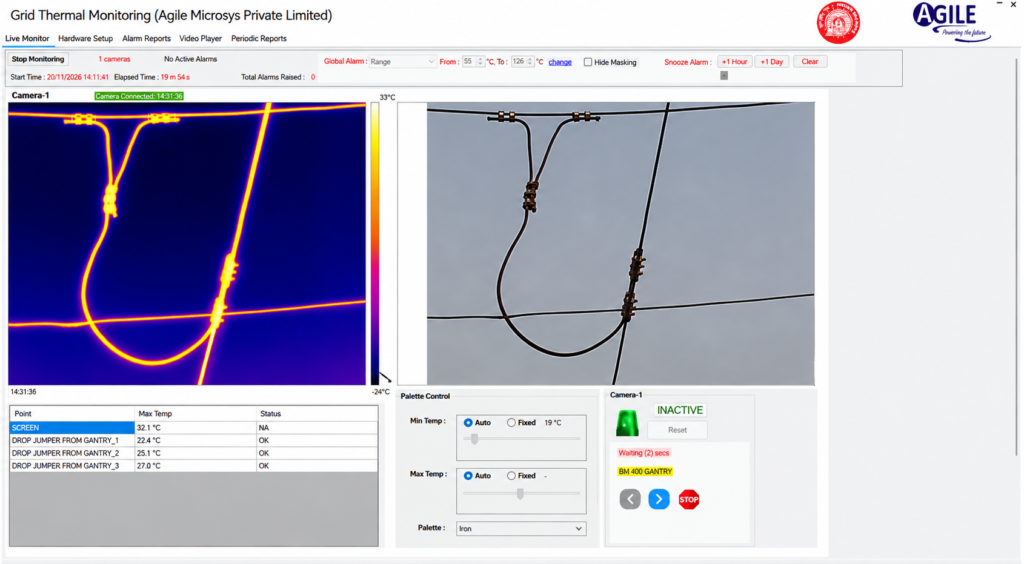
The system provides an integrated monitoring interface with live thermal imaging, visible imaging, temperature monitoring, camera controls, alarm reports and graphical analysis. These capabilities help maintenance teams observe monitored electrical equipment, review temperature information and investigate abnormal thermal conditions.
This article explains the important features of GTRM PRO 2.0 and how online thermal monitoring can support railway electrical maintenance.
What Is GTRM PRO 2.0 Railway Thermal Monitoring System?
GTRM PRO 2.0 is a Grid Thermal Remote Monitoring solution developed by Agile MicroSys for monitoring critical electrical infrastructure.
It combines thermal imaging cameras with dedicated monitoring software to provide temperature information and visual monitoring of selected equipment.
Unlike a conventional handheld thermal inspection, an online thermal monitoring arrangement can observe predefined equipment locations through installed cameras and a centralized monitoring interface.
The software brings important monitoring functions together, allowing users to:
- View live thermal images.
- Observe corresponding visible images.
- Monitor configured temperature measurement points.
- Review camera connection and monitoring status.
- Access alarm reports and graphical summaries.
- Review historical monitoring information.
- Operate supported camera controls.
These functions provide maintenance personnel with useful information for equipment condition assessment and maintenance planning.
How Does Railway Traction Substation Thermal Monitoring Work?
A thermal monitoring system uses infrared imaging to observe temperature variations across electrical equipment.
The thermal camera detects infrared radiation emitted by objects and converts the information into a thermal image. Different temperatures appear as different colours according to the selected thermal colour palette.
GTRM PRO 2.0 combines this thermal information with monitoring software to help users observe and analyse selected equipment.
The general monitoring process involves the following stages:
1. Thermal Image Capture
The thermal imaging camera captures thermal information from the selected electrical equipment.
The thermal image helps users identify temperature variations across connections and other monitored components.
2. Visible Image Monitoring
Along with thermal imaging, the monitoring interface can display the corresponding visible image.
This provides additional visual context and helps users understand which electrical component is being monitored.
3. Temperature Measurement
The software displays temperature readings for configured measurement points.
Users can review these readings to identify unusual temperature variations and determine whether further investigation is necessary.
4. Alarm Monitoring
Temperature thresholds can be configured according to the monitoring application.
When the configured alarm conditions are met, the system can generate alarm information for review by maintenance personnel.
5. Data Recording and Reporting
Monitoring information and alarm records can be reviewed through the available reporting interface.
This helps users analyse recorded events and maintain a historical view of monitoring activity.
Key Features of GTRM PRO 2.0 for Railway Thermal Monitoring
GTRM PRO 2.0 brings several important monitoring and reporting functions together through a single software interface.
1. Live Thermal Imaging and Visible Monitoring
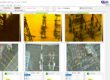
One of the important functions of GTRM PRO 2.0 is its live thermal monitoring interface.
The software displays thermal and visible images together, helping operators observe the monitored electrical components.
Thermal images reveal temperature distribution, while visible images provide information about the physical appearance and position of the equipment.
This combination makes it easier to review temperature variations and understand the condition of selected monitoring points.
2. Temperature Monitoring of Electrical Components
Monitoring temperature at selected electrical points is an important part of condition monitoring.
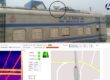
The GTRM PRO 2.0 interface includes a temperature measurement table showing configured monitoring points and their maximum temperature readings.
In the displayed monitoring interface, separate measurement points are identified for drop jumper connections associated with different gantry locations.
The software presents information such as:
- Monitoring point name.
- Maximum recorded temperature.
- Monitoring status.
This allows maintenance teams to compare readings from different monitored points and identify temperature variations that may require further inspection.
A temperature reading should always be assessed in relation to equipment loading, ambient conditions, measurement settings and the applicable maintenance limits.
3. Intelligent Alarm Monitoring and Temperature Thresholds
Abnormal temperature conditions can indicate potential electrical problems.
For this reason, alarm monitoring is an important part of online thermal monitoring.
GTRM PRO 2.0 provides alarm-related functions through its monitoring interface.
The system interface includes:
- Global alarm settings.
- Configurable temperature ranges.
- Alarm status monitoring.
- Alarm count information.
- Alarm clearing and snoozing controls.
These functions help operators review monitoring conditions and manage alarm information.
Appropriate temperature thresholds should be selected according to the electrical equipment, operating conditions and maintenance requirements.
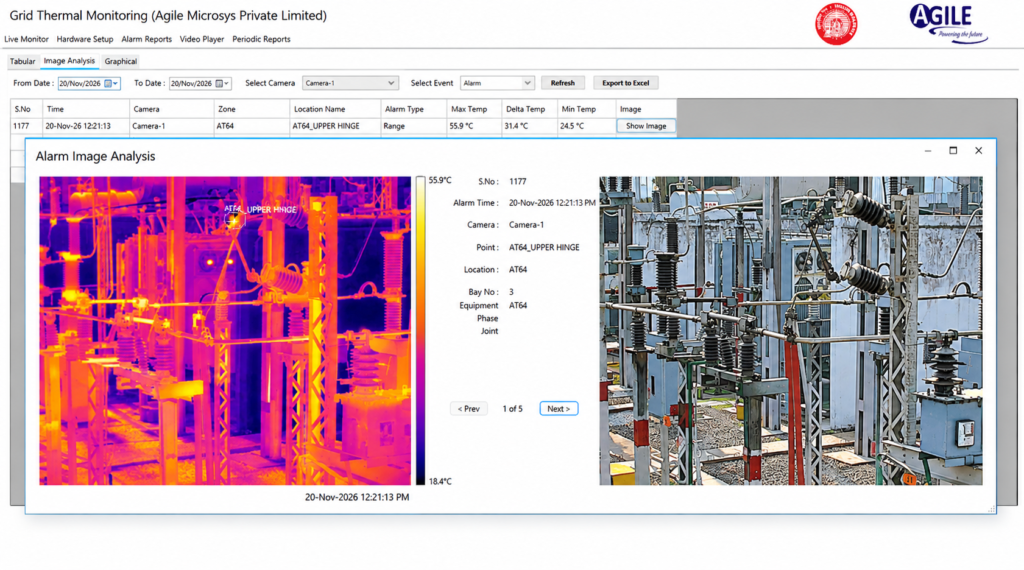
4. Alarm Reports and Historical Analysis
Identifying an abnormal temperature condition is only one part of equipment monitoring.
Reviewing historical information is also important because it helps maintenance teams understand when monitoring events occurred and how frequently alarms were recorded.
GTRM PRO 2.0 includes an Alarm Reports section with different reporting views.
The available interface includes:
Tabular reporting: Displays monitoring and alarm information in a structured table.
Image analysis: Provides access to image-based monitoring information.
Graphical reporting: Presents alarm activity in graphical formats for easier review.
These reporting options help maintenance personnel review recorded information and investigate events that may require further attention.
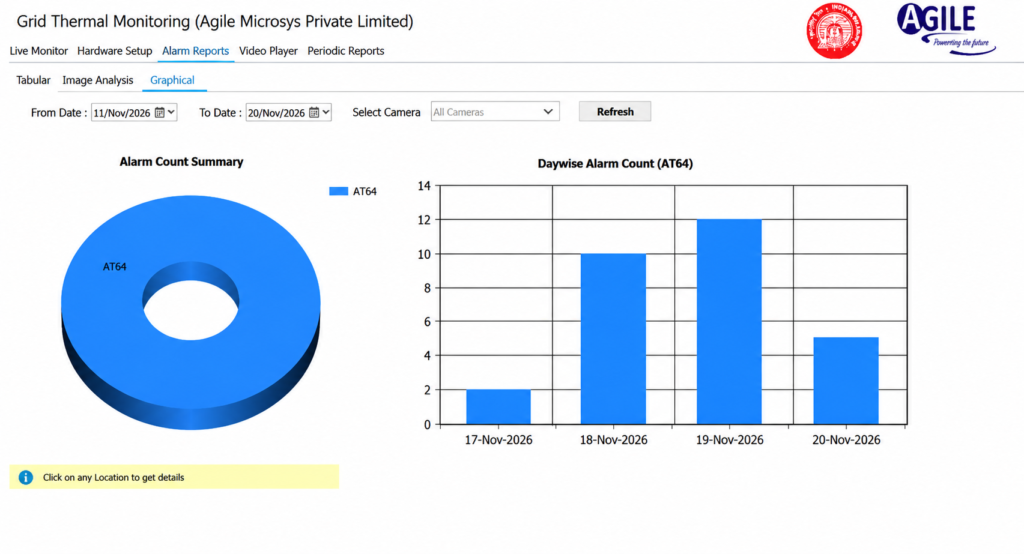
5. Graphical Reports and Monitoring Trends
Graphical reporting makes monitoring information easier to understand.
Instead of reviewing only numerical records, users can examine graphical summaries to understand changes in recorded alarm activity over selected dates.
GTRM PRO 2.0 provides graphical reporting with date selection and camera selection options.
This helps users:
- Review alarm activity over selected periods.
- Understand day-wise alarm counts.
- Compare monitoring records.
- Identify periods with increased alarm activity.
- Review historical monitoring information.
Historical reports can support maintenance planning and help teams decide which equipment conditions require further investigation.
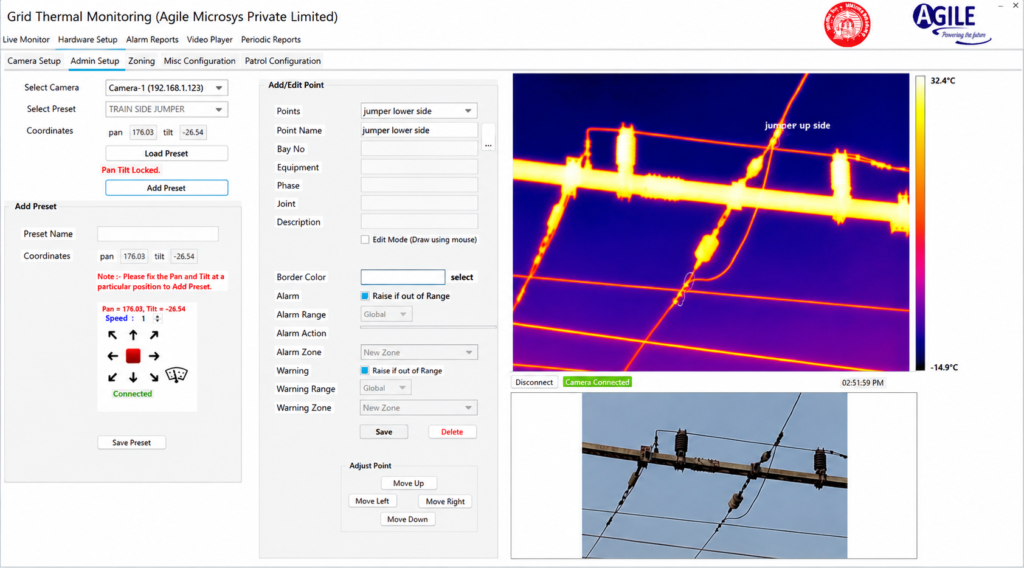
6. Thermal Camera Monitoring and Control
Camera monitoring is another important part of the GTRM PRO 2.0 interface.
The software includes camera status information and supported camera control functions.
Depending on the configured camera hardware, users can operate available controls to change the camera’s viewing direction and monitor selected areas.
The interface shown includes camera connection status and directional control buttons.
This type of camera control can help operators observe different equipment areas without requiring the operator to be physically present near the camera.
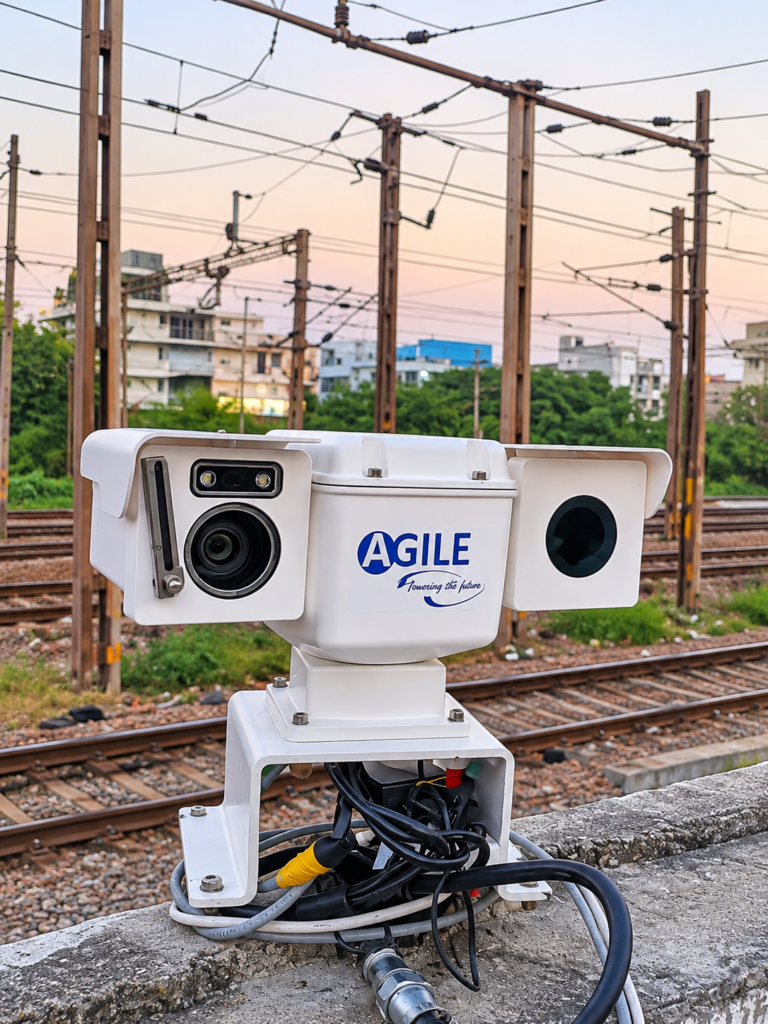
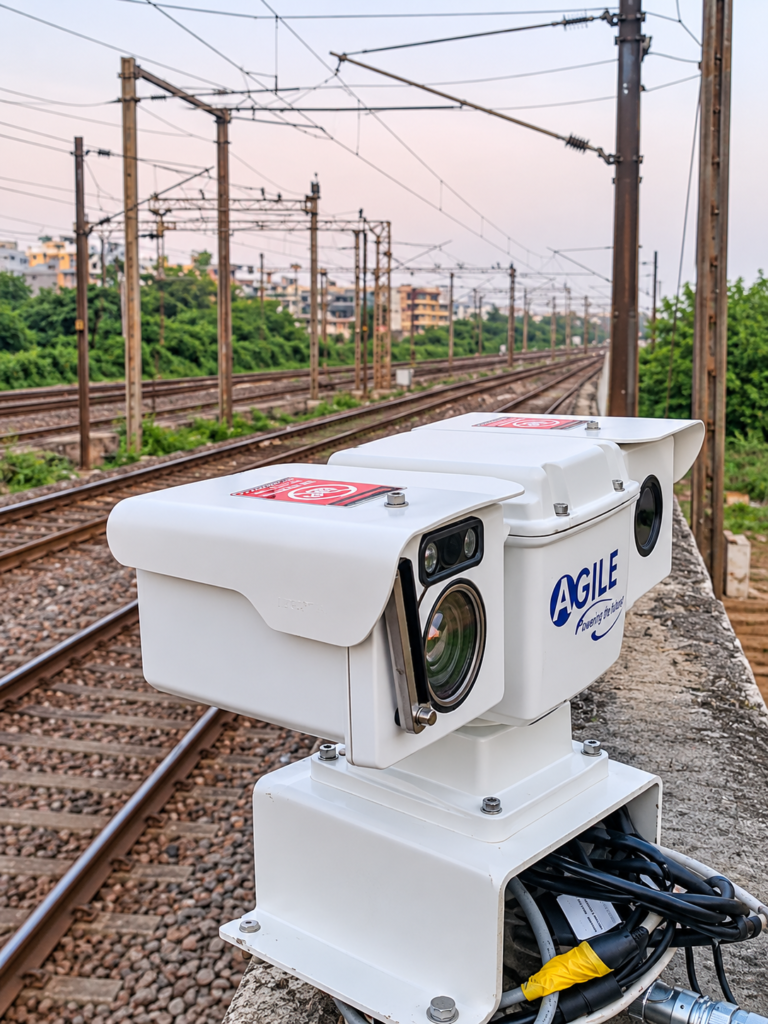
7. Camera Face Tracking and Monitoring Views
Camera positioning and viewing control are useful when monitoring selected equipment areas.
AGILE camera footage also illustrates face-tracking views and camera movement capabilities.
These images can be used to explain the camera’s viewing and tracking functionality.
For railway electrical monitoring, camera positioning and suitable viewing angles are important for observing the intended monitoring area.
The camera configuration should be selected according to the equipment layout, monitoring distance and application requirements.
8. Thermal Scanning of Electrical Equipment
Thermal scanning provides information about the temperature distribution of monitored equipment.
It helps users observe thermal patterns and identify areas showing unusual temperature variations.
The additional thermal scanning images illustrate how thermal imaging can be used to observe electrical equipment and review temperature differences.
Thermal information can help maintenance personnel identify areas that may require further inspection.
The actual cause of a thermal abnormality should be established through appropriate technical investigation.
Why Is Railway Traction Substation Thermal Monitoring Important?
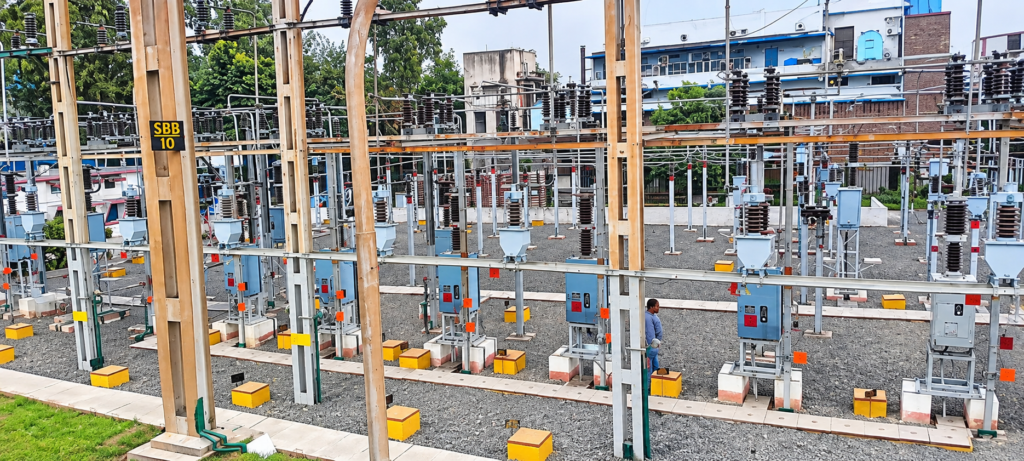
Railway traction substations contain important electrical equipment that must operate reliably.
Electrical connections, busbars, switchgear, transformers and other power distribution components may develop abnormal temperature conditions because of different electrical or environmental factors.
Some potential causes of abnormal heating include:
- Loose electrical connections.
- Increased contact resistance.
- Overloading.
- Deterioration of electrical connections.
- Ageing electrical components.
- Poor contact conditions.
- Other abnormal operating conditions.
A thermal imaging system can help identify unusual temperature patterns so that maintenance personnel can investigate them.
Benefits of Railway Traction Substation Thermal Monitoring
1. Early Identification of Abnormal Heating
Thermal imaging can help identify unusual temperature variations before visible damage becomes apparent.
2. Continuous Equipment Observation
A suitably configured online thermal monitoring system can observe selected critical equipment without depending entirely on periodic manual inspection.
3. Better Maintenance Planning
Temperature information and historical reports can support decisions about inspection priorities.
4. Improved Equipment Visibility
Thermal and visible images provide complementary information about monitored electrical components.
5. Alarm-Based Monitoring
Configured alarm thresholds can help maintenance personnel identify conditions that require attention.
6. Historical Monitoring Information
Graphical and tabular reports help users review previously recorded monitoring events.
Thermal monitoring should complement regular electrical inspection, testing and established railway maintenance procedures.
Online Thermal Monitoring vs Conventional Handheld Thermal Inspection
Both online thermal monitoring and handheld thermal imaging have important roles in electrical maintenance.
| Parameter | Handheld thermal camera | Online thermal monitoring |
|---|---|---|
| Inspection method | Manual inspection | Camera-based remote monitoring |
| Monitoring | During inspection rounds | Continuous where configured |
| Image viewing | Through handheld display | Through monitoring software |
| Temperature review | During inspection | At configured monitoring points |
| Reporting | Inspection records | Software-based monitoring reports |
| Application | Routine and troubleshooting inspections | Selected critical equipment monitoring |
The appropriate solution depends on the equipment, inspection requirements, monitoring frequency and operating environment.
Applications of GTRM PRO 2.0 Railway Thermal Monitoring
Online thermal monitoring can support different electrical infrastructure applications where temperature observation is important.
Potential applications include:
Railway Traction Substations
Monitor selected electrical connections and critical equipment for abnormal temperature variations.
Electrical Switchyards
Observe selected electrical components and connections to support equipment condition monitoring.
Power Distribution Infrastructure
Use thermal imaging to observe temperature variations across selected power distribution assets.
Industrial Electrical Substations
Support condition monitoring of electrical infrastructure in manufacturing and process industries.
Critical Electrical Equipment
Monitor predefined equipment areas where temperature changes can provide useful maintenance information.
The monitoring arrangement should be designed according to the specific application and approved technical requirements.
You can also read our article on Grid Thermal Monitoring Railway for Safer and Smarter Rail Operations to explore railway thermal monitoring applications.
Why Choose Agile MicroSys for Thermal Monitoring Solutions?
Agile MicroSys Pvt. Ltd. provides thermal imaging, online thermal monitoring and industrial automation solutions for power utilities, railways and manufacturing industries.
Our solutions combine thermal imaging technology, monitoring software and application-oriented engineering to support electrical equipment monitoring.
Our thermal monitoring portfolio includes solutions for:
- Substation and grid thermal monitoring.
- Railway OHE hotspot monitoring.
- Grid thermal remote monitoring.
- Coal stockpile thermal monitoring.
- Cement kiln thermal monitoring.
- Industrial fire-threat monitoring.
- Other customized online thermal monitoring applications.
With application-focused monitoring solutions, Agile MicroSys supports organizations looking to improve equipment visibility and strengthen maintenance practices.
For more information, explore our related article on Smart Thermal Monitoring System for Traction Sub-Station.
Download Our Railway Solutions Brochure
Conclusion: Smarter Railway Electrical Maintenance with GTRM PRO 2.0
Effective monitoring of electrical equipment is important for maintaining reliable railway power infrastructure.
GTRM PRO 2.0 by Agile MicroSys combines thermal imaging, visible imaging, temperature monitoring, camera controls, alarm reporting and graphical analysis through an integrated monitoring interface.
These capabilities help maintenance teams observe selected electrical equipment, review temperature information and investigate abnormal thermal conditions.
By incorporating online thermal monitoring into an electrical maintenance strategy, railway organizations can improve equipment visibility and support more informed condition-based maintenance decisions.
Explore Advanced Railway Thermal Monitoring Solutions with Agile MicroSys
Looking for thermal monitoring solutions for railway traction substations or critical electrical infrastructure?
Contact Agile MicroSys Pvt. Ltd. to discuss your thermal monitoring requirements.
Website: https://agilemicrosys.com/
Email: marketing@agilemicrosys.com
Phone: +91 9582931318
Explore More from Agile MicroSys
Watch our technical videos and explore our thermal monitoring solutions:
Stay connected with us for updates on railway thermal monitoring, OHE hotspot detection and industrial inspection solutions.