Introduction
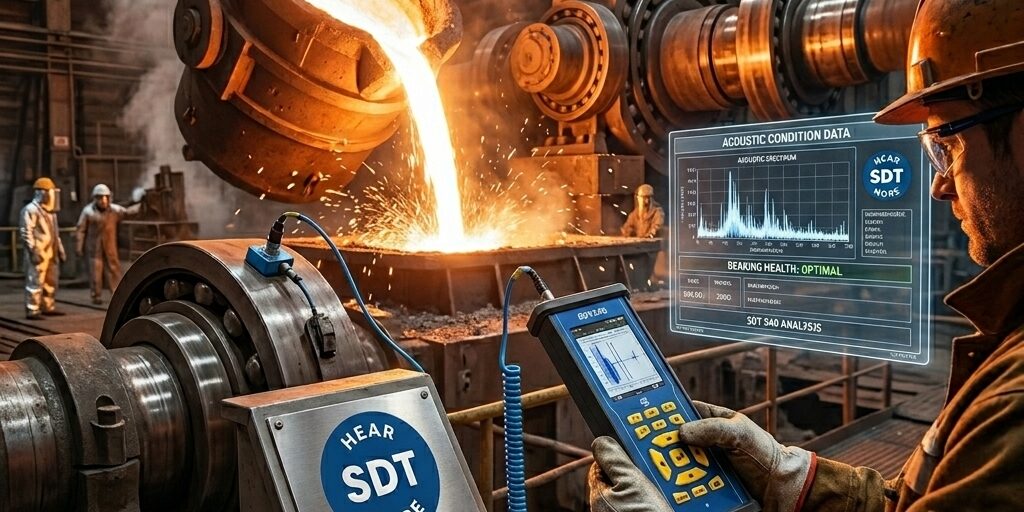
Slow Rotating Bearing Monitoring plays a critical role in ensuring safe and reliable operation of steel manufacturing equipment. In Steel Melting Shops (SMS), Basic Oxygen Furnaces (BOF), and LD Converters, large furnace systems slowly tilt to transfer molten steel into refractory-lined ladles.
Because these bearings rotate at extremely low speeds, traditional vibration monitoring techniques may not detect early-stage defects effectively. Therefore, ultrasound technology has become one of the most effective solutions for identifying lubrication problems, friction, and bearing damage before failure occurs.
Want to learn more about industrial ultrasound inspections?
Slow Rotating Bearing Monitoring in Steel Making Process
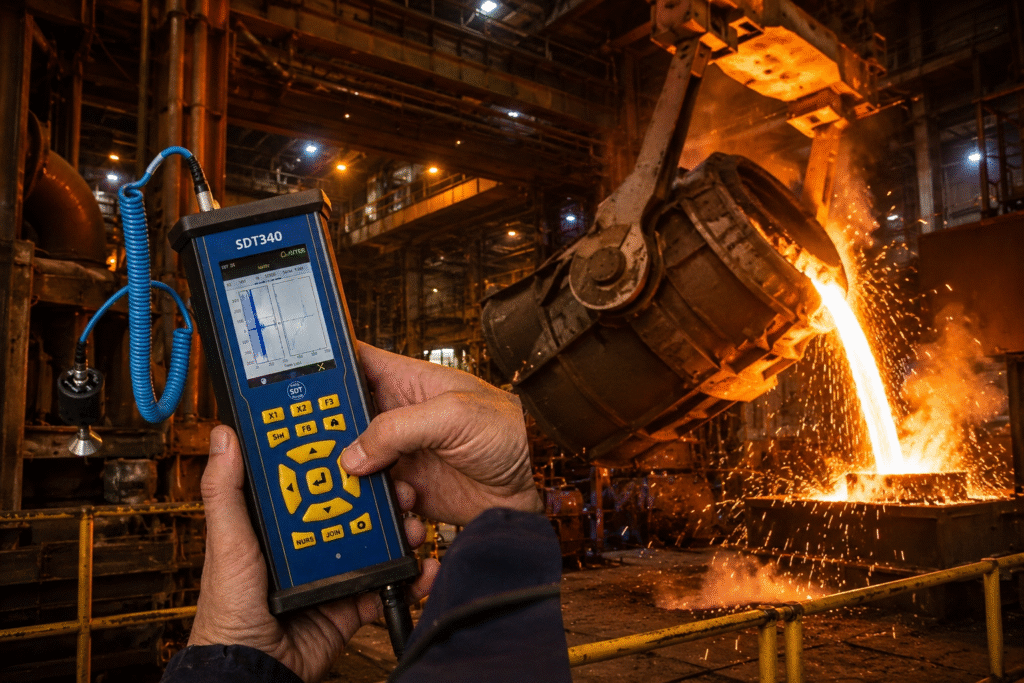
Steel production involves converting molten iron into molten steel inside a BOF or LD Converter. Oxygen is injected into the furnace to remove impurities and achieve the required steel composition.
After processing, the furnace slowly tilts to pour molten steel into a refractory-lined ladle vessel. Consequently, every mechanical component involved in this movement must operate reliably and safely.
Even a small bearing defect can lead to costly downtime, maintenance challenges, and operational risks.
Why Ultrasound Bearing Monitoring Is Critical for Slow Rotating Bearings
Large bearings support the tilting mechanism of ladle furnaces.
These bearings are responsible for:
- Supporting heavy furnace loads
- Enabling smooth furnace tilting
- Maintaining process safety
- Reducing operational risk
- Supporting continuous production
However, due to extremely slow rotational speeds, developing defects often remain hidden for long periods.

Challenges of Slow Rotating Bearing Monitoring
Monitoring slow-speed bearings presents unique challenges.
Traditional vibration monitoring systems may struggle because:
- Rotational speed is extremely low
- Fault frequencies are difficult to detect
- Bearing damage develops gradually
- Lubrication issues may remain unnoticed
- Early warning signals can be weak
As a result, maintenance teams require a more sensitive technology capable of detecting microscopic friction and mechanical impacts.
How Ultrasound Technology Improves Slow Rotating Bearing Monitoring
Ultrasound technology detects high-frequency sound waves produced by friction, lubrication changes, and mechanical impacts.
Unlike vibration monitoring, ultrasound can identify developing defects at a much earlier stage.
Benefits include:
Early Fault Detection
Ultrasound identifies bearing defects before significant damage occurs.
Improved Lubrication Management
Maintenance teams can determine whether bearings are under-lubricated, over-lubricated, or properly lubricated.
Reduced Downtime
Early detection allows maintenance activities to be planned before failures occur.
Improved Reliability
Critical steel plant equipment can continue operating safely and efficiently.
SDT 340 Ultrasound Solution for Slow Rotating Bearing Monitoring
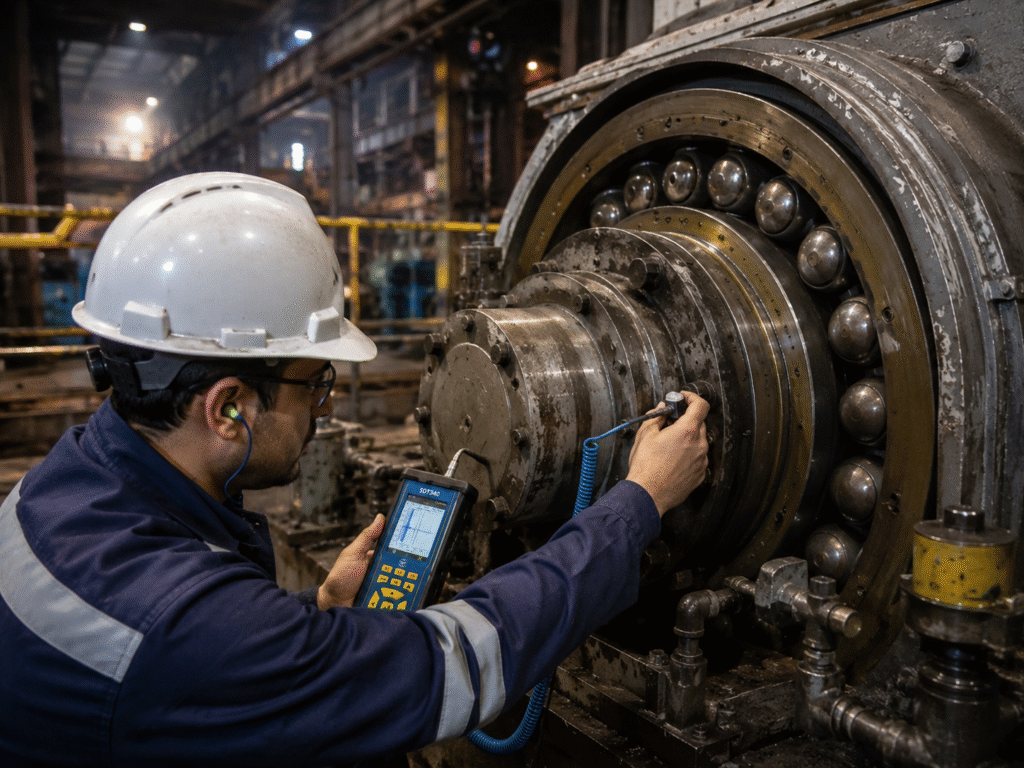
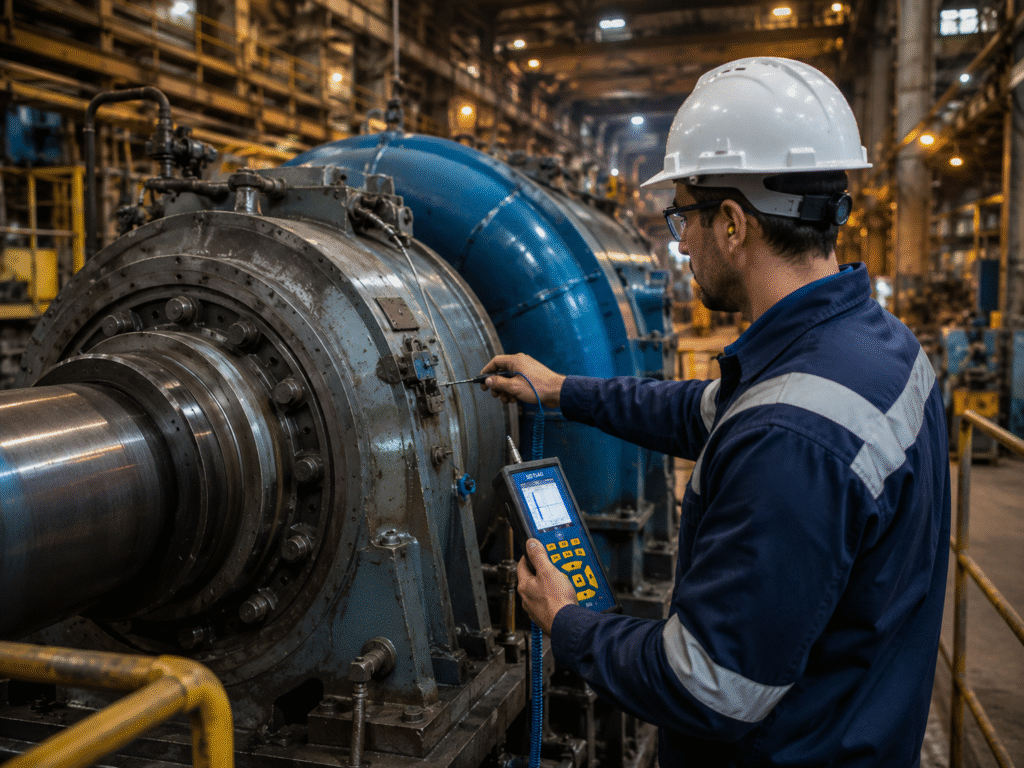
The SDT 340 Ultrasound Detector is widely used for industrial condition monitoring applications.
The system helps maintenance teams perform:
- Bearing condition monitoring
- Lubrication management
- Mechanical inspections
- Compressed air leak detection
- Steam trap inspections
- Electrical fault detection
For slow rotating bearings, SDT 340 provides valuable information that may not be visible using conventional vibration monitoring techniques.
Learn more about predictive maintenance solutions:
Benefits of Ultrasound Bearing Monitoring Using SDT 340
Facilities that implement ultrasound-based monitoring can achieve:
- Reduced maintenance costs
- Increased equipment life
- Improved plant reliability
- Better lubrication practices
- Reduced unplanned downtime
- Improved operational safety
Furthermore, predictive maintenance programs help maintenance teams make informed decisions based on equipment condition rather than fixed maintenance schedules.
Typical Applications of Slow Rotating Bearing Monitoring in Steel Plants
Slow Rotating Bearing Monitoring is commonly used in:
- SMS Plants
- BOF Converters
- LD Converters
- Ladle Furnaces
- Continuous Casting Machines
- Rolling Mills
- Gearboxes
- Motors
- Pumps
Therefore, ultrasound monitoring has become an important part of modern reliability programs within steel manufacturing facilities.
Related Resources
Online Thermal Monitoring Solutions
Previous Blog on Reliability Monitoring
Watch Our Video
Watch our YouTube video explaining industrial ultrasound inspection and bearing monitoring techniques.
Follow Agile Microsys
Follow Agile Microsys Pvt. Ltd. for industrial reliability, predictive maintenance, thermal monitoring, and ultrasound inspection updates.
Why Choose Agile Microsys Pvt. Ltd.
Agile Microsys Pvt. Ltd. provides specialized solutions for:
- Ultrasound Inspection
- Bearing Condition Monitoring
- Predictive Maintenance
- Thermal Imaging
- Online Thermal Monitoring
- Reliability Improvement Programs
With extensive experience across steel, power, cement, sugar, and industrial sectors, our team helps organizations improve equipment reliability and reduce maintenance challenges.
Contact Us
Website: https://agilemicrosys.com
Follow for more updates: LinkedIn
Phone: +91-9582931318
Need assistance with Slow Rotating Bearing Monitoring, ultrasound inspections, or predictive maintenance programs?
Contact Agile Microsys Pvt. Ltd. for technical consultation, training, and field support.